

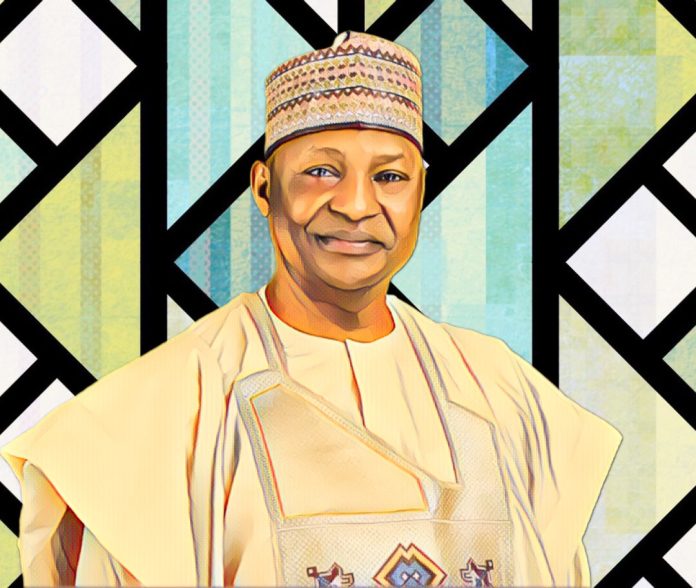
KEY POINTS
- Abubakar Malami is challenging the EFCC’s seizure of his assets, insisting they were legally acquired.
- He accuses the EFCC of lacking evidence and inflating the value of his properties.
- The court case could define the limits of asset forfeiture powers in Nigeria.
Former Attorney General of the Federation, Abubakar Malami, has mounted a strong legal defence against the seizure of his assets by the Economic and Financial Crimes Commission, insisting that all the properties in question were legitimately acquired.
In documents submitted before the Federal High Court of Nigeria in Abuja, Malami challenged the interim forfeiture order obtained by the EFCC earlier in January 2026. The anti-graft agency had argued that the properties were suspected to be proceeds of crime.
However, Malami dismissed the allegation as baseless, stating that the EFCC failed to provide any concrete or prima facie evidence linking his assets to illegal activities. According to him, the claims are speculative and unsupported by facts.
He explained that his wealth was accumulated over decades through legitimate means, including his long-standing legal career, business investments in sectors such as hospitality, agriculture, and education, as well as income from asset sales and financial transactions like bank loans.
Malami further emphasised that all his earnings and assets were properly declared to the Code of Conduct Bureau, in line with legal requirements for public officials.
A key part of his defence is the accusation that the EFCC deliberately inflated the value of his properties to strengthen its case. He argued that assets acquired for hundreds of millions of naira were misrepresented as being worth billions. Independent valuers, he said, have provided more accurate and significantly lower valuations.
Beyond disputing the ownership and value of the assets, Malami also accused the EFCC of procedural violations. He alleged that operatives of the commission seized properties without a final court order, evicted occupants, including family members,and confiscated documents unlawfully.

