

KEY POINTS
- Nigerian billionaire Abdul Samad Rabiu addressed fellows at the Desmond and Leah Tutu Legacy Foundation in Cape Town.
- He told young African leaders that Africa’s greatness must be built intentionally, one day at a time.
- Rabiu’s combined fortune crossed $14 billion after record results at BUA Cement and BUA Foods.
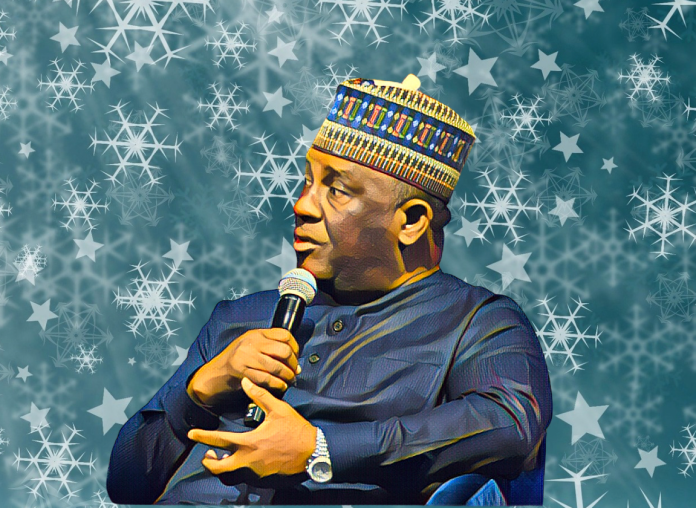
Abdul Samad Rabiu, the Nigerian billionaire founder of BUA Group, told young African leaders in Cape Town that the continent’s greatness will not arrive on its own. They must build it, intentionally, one day at a time.
Rabiu addressed fellows at the Desmond and Leah Tutu Legacy Foundation on Monday, sharing his entrepreneurial journey and engaging in what he called a deep conversation about Africa’s economic future. He framed the responsibility as collective and generational, not individual.
A 14 billion-dollar fortune behind the message
Notably, Rabiu’s combined fortune recently crossed $14 billion following record results at BUA Cement and BUA Foods. He said the moment in Cape Town stood out not for the story he told but for the questions the fellows asked back.
“What stood out most wasn’t just telling my story. It was the depth of the conversation that followed. The questions, the curiosity, and the shared belief that we all have a role to play in shaping a better future for Africa,” Rabiu wrote.
Specifically, the discussion centered on three themes: vision, responsibility and the power of thinking beyond self-imposed limitations. Furthermore, Rabiu has spent decades embodying those themes through BUA Group’s industrial expansion.
A long industrial road
BUA started as a commodities trading company in 1988. Specifically, Rabiu pushed it into sugar refining in the early 2000s, breaking an eight-year monopoly in the Nigerian market. He then moved into cement manufacturing in 2009 with the acquisition of the Cement Company of Northern Nigeria.
Additionally, the Obu Cement Plant in Edo State came online in 2015. Rabiu listed BUA Cement on the Nigerian Exchange in 2020 and BUA Foods in 2022, converting decades of private industrial development into public market accountability.
According to Billionaires Africa, the numbers behind the visit are striking. BUA Cement posted revenue of 1.18 trillion naira in 2025 and declared a 10 naira-per-share dividend, more than four times the prior year. BUA Foods generated profit after tax of 518.39 billion naira, nearly doubling its 2024 earnings.
Cape Town’s resonance
Notably, Cape Town carries particular weight for the kind of pan-African conversation Rabiu came to lead. Archbishop Desmond Tutu, the Nobel Peace Prize laureate and anti-apartheid icon, spent much of his life and ministry there. He died in December 2021.
Meanwhile, the foundation runs a fellows program that gathers young African leaders from across the continent. The aim is to equip them with the ethical, intellectual and practical tools to drive change in their communities and countries.
“If there’s one thing I took away, it’s this: the potential is undeniable, and the responsibility is ours. Africa’s greatness isn’t a distant dream. It’s something we build, intentionally, every single day,” Rabiu said.
Beyond personal wealth
At 65, Rabiu is now Africa’s third-wealthiest individual. He could reasonably focus on running his own enterprises. However, his decision to accept the Cape Town invitation and call the experience one of his most memorable recent engagements signals a wider lens.
Crucially, Rabiu sees the next chapter not as a personal wealth story but as an African one. The next generation, in his telling, holds at least as much of the responsibility as he does. Ultimately, whether the fellows pick up the baton with the same long-horizon discipline that built BUA will shape the continent’s economic narrative for decades to come.

