

KEY POINTS
- Two defendants in the alleged coup plot against President Tinubu admitted in video evidence to knowing about the plan.
- Retired Major General Mohammed Ibrahim Gana denied any role, while retired Navy Captain Erasmus Victor and Inspector Ahmed Ibrahim conceded involvement.
- Former Bayelsa Governor Timipre Sylva, named in the charge, is reportedly at large after fleeing the country.
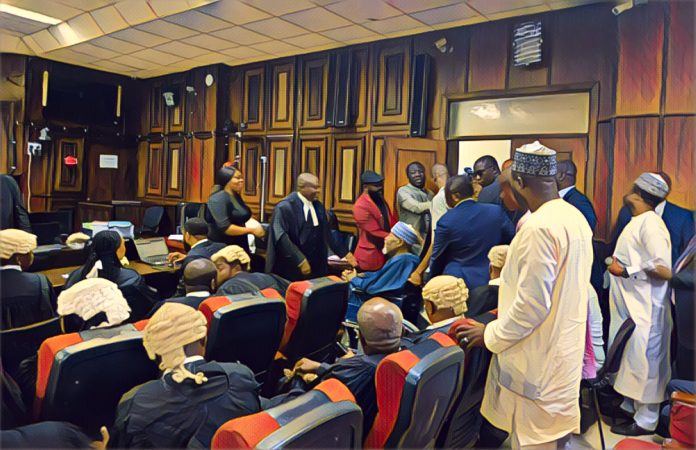
The federal government has played damning video evidence in court showing two defendants in the alleged coup plot against President Bola Tinubu admitting to knowing about the plan to overthrow his administration. The recordings landed Monday at the Federal High Court in Abuja.
In the videos that the prosecution tendered before the court, some of the defendants on trial for masterminding the alleged coup explained their level of involvement to investigators. The footage formed the centerpiece of the prosecution’s case in charge number FHC/ABJ/CR/206/2026.
Who is in the dock
The defendants include retired Major General Mohammed Ibrahim Gana, retired Naval Captain Erasmus Ochegobia Victor, serving Police Inspector Ahmed Ibrahim, plus three others: Zekeri Umoru, Bukar Kashim Goni and Abdulkadir Sani.
Notably, former Bayelsa Governor Timipre Sylva, who served as Minister of State for Petroleum Resources under the late President Muhammadu Buhari, also features in the charge that the Office of the Attorney-General filed. He reportedly fled the country before authorities exposed the plot.
Gana’s denial
Specifically, the first defendant, retired Major General Gana, denied knowledge of the plot. He said he retired from the Nigerian Army in 2010 as Chief of Defence Logistics and has lived a quiet life since.
Furthermore, Gana told investigators that he knew Colonel M. A. Ma’aji, the alleged plot coordinator, but only as someone struggling with promotion issues. He said had he known Ma’aji was planning a coup, he would have reported it to the relevant authorities.
He acknowledged that investigators traced a 2 million naira transfer to him and that he shared a Joshua Dongayaro coup speech via WhatsApp. However, he denied conducting reconnaissance at the Presidential Villa or helping to raise billions from a former governor.
In contrast, the second defendant, retired Captain Victor, admitted to knowing Ma’aji and being aware of the plot. He said his relationship with Ma’aji clouded his judgment, after Ma’aji vented anger over his stalled promotion and threatened to overthrow the system.
Specifically, Victor said he advised against the move and suggested Ma’aji consider retirement instead. He admitted that the plotters had asked him to provide financial support, raise funds or help acquire an apartment, with the offer of an appointment if the coup succeeded.
“I feel so bad that I find myself in this situation. I am pleading for clemency,” Victor said, comparing his case to being in the wrong place at the wrong time.
Ibrahim’s reconnaissance
The third defendant, Inspector Ibrahim, who works at the State House, said the discussions began over Ma’aji’s promotion before shifting to coup planning. He admitted receiving 1.4 million to 1.5 million naira and conducting reconnaissance around the Presidential Villa.
Additionally, Ibrahim said he took photographs of parts of the Villa and discussed access routes. He confirmed that the plotters used coded terms such as “fertilizer” and “farming” to refer to funding and the operation.
Meanwhile, defense lawyers challenged the admissibility of the video evidence, arguing the defendants did not make the statements voluntarily. Trial Justice Joyce Abdulmalik dismissed their efforts to block the playback in open court.
Crucially, the judge ordered a trial-within-trial to determine the voluntariness of the statements. The case continued Tuesday with further hearing on the 13-count charge covering treason, terrorism, failure to disclose security intelligence and money laundering.

