

KEY POINTS
- Works Minister David Umahi handed the N545 billion Carter Bridge reconstruction contract to CCECC for a 36-month build.
- Funding splits 30 percent Federal Government counterpart and 70 percent external borrowing, with a cable-stayed design planned.
- Umahi also ordered emergency closure of one Eko Bridge carriageway from midnight on May 10 over illegal dredging damage.
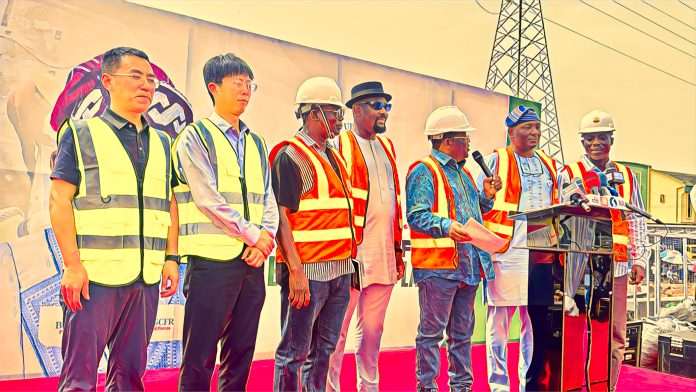
Works Minister David Umahi on Wednesday handed the construction of a new Carter Bridge in Lagos to China Civil Engineering Construction Corporation, putting a N545 billion price tag on a project he said the Tinubu administration could no longer postpone.
Umahi disclosed the award at a handover ceremony at the Carter Bridge site on Lagos Island, telling reporters that fresh underwater investigations confirmed that supporting piles on the colonial-era bridge had displaced from their pile caps, leaving the structure increasingly unsafe.
Now CCECC has 36 months to deliver the new bridge, with funding split 30 percent from Federal Government counterpart contributions and 70 percent from external borrowing. The contractor, Umahi said, edged out five other bidders on technical and commercial grounds.
Why a rebuild, not a repair
Specifically, Umahi said expert assessments dating back to 2013 and 2019 had flagged structural concerns that worsened in what specialists called “geometrical progression.” Indeed, fresh investigations under his ministry confirmed that the deterioration had moved beyond rehabilitation.
“When we went deeper with specialist divers and geologists, we discovered that some of the piles had moved away from their pile caps. It’s just like the hip of the leg is cut off. That is the level of damage we are dealing with,” the minister said.
Moreover, Umahi cited expert advice that the cost of rehabilitation almost doubled the cost of a brand-new structure, prompting the call to demolish and rebuild.
The new Carter Bridge will feature a cable-stayed section, a design Umahi said will improve aesthetics, navigation along the lagoon and Lagos’ standing as a destination for world-class infrastructure.
Additionally, the minister said due process guided contractor selection. The Bureau of Public Procurement recommended CCECC after six firms submitted bids, and the Federal Executive Council approved the award.
A statement issued by Senior Special Assistant on Media Francis Nwaze framed the project as part of President Bola Tinubu’s broader push to safeguard critical infrastructure.
Eko Bridge emergency
Meanwhile, Umahi also announced the emergency closure of one carriageway on the Eko Bridge from midnight on Sunday, May 10, over what he called severe structural damage caused by illegal dredging.
Barges, he said, struck pile caps and broke three piles, with two more breaking during recovery operations.
“When they knocked the pile cap, they broke three piles. When they were trying to remove the barge, they broke another two. That section is now dangerously weak,” the minister said.
However, the other carriageway will remain open while engineers lift sections of the bridge for underwater repairs. Today, specialist contractors are already mobilizing, Umahi added.
Together, the Carter and Eko Bridge interventions sharpen the Tinubu administration’s case that it is rebuilding critical infrastructure ahead of 2027. Furthermore, Umahi tied the cost of inaction to public safety, arguing that the government had inherited rather than created the structural rot.
“We are solving problems we didn’t create, but that’s why you voted for us, and that we are going to be working day and night,” he said.
Whether the 36-month delivery timeline holds will determine the political dividend. Yet for now, Lagos commuters can expect disruption on Eko Bridge and a familiar lagoon skyline gradually replaced with a cable-stayed silhouette.

