

KEY POINTS
- PEBEC will run a two-day clean-up and enforcement sweep on the Apapa and Tin Can port corridors on May 14 and 15.
- The operation will tackle traffic congestion, illegal checkpoints, indiscriminate truck parking and environmental degradation.
- Agencies involved include NPA, Customs, Police, Lagos State, terminal operators and unions.
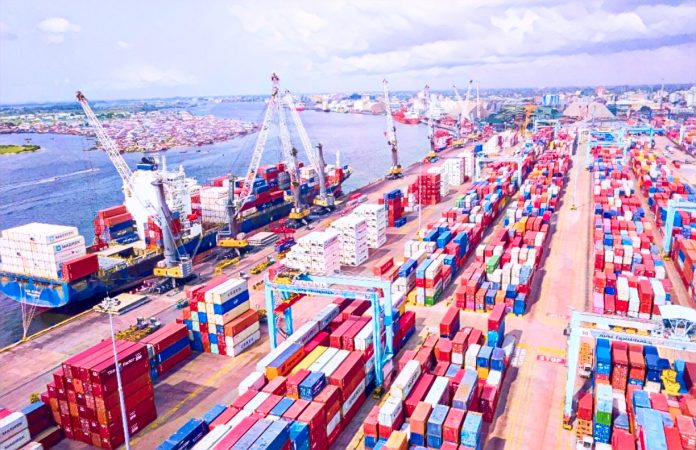
Princess Zahrah Mustapha Audu’s Presidential Enabling Business Environment Council will run a two-day clean-up and enforcement sweep on Lagos’s Apapa and Tin Can port corridors next week, targeting the congestion, illegal checkpoints and truck parking that have long inflated the cost of doing business at Nigeria’s busiest seaports.
The director general of PEBEC said the operation, scheduled for May 14 and 15, will run through the council’s Ports and Customs Efficiency Committee, in what amounts to one of the most concrete physical interventions the council has staged in years.
Now the move comes as importers, exporters and trade groups continue to flag the Apapa-Tin Can axis as a chokepoint that drains hours off delivery schedules and adds dollars to landed cost.
What gets cleared concerning port corridor cleanup
Specifically, the exercise will target persistent traffic congestion, illegal checkpoints, indiscriminate parking of trucks, environmental degradation and other unregulated activities along the port access roads. Audu said these issues have continued to hinder cargo movement and raise the cost of doing business through Lagos.
Indeed, the port corridors have become a parable of urban dysfunction, with trucks queuing for days, informal extortion points multiplying and gridlock spilling onto adjoining communities. Past interventions, from electronic call-up systems to barricade enforcement, have produced partial wins but not lasting order.
Moreover, the new sweep aims to remove illegal structures and operational obstructions while improving environmental sanitation, an acknowledgment that traffic and public health pressures have moved in lockstep at the port gates.
Multi-agency lineup
Today, the participating agencies span every layer of Nigeria’s port ecosystem. The Nigerian Ports Authority, Nigeria Customs Service, Nigeria Police Force, Lagos State Government, port terminal operators, relevant unions and other security and regulatory bodies will all field personnel during the two-day window.
Furthermore, PEBEC said the multi-agency mix should strengthen collaboration among the bodies operating at the corridor, several of which have historically pulled in different directions on enforcement.
Additionally, the operation lands as the Tinubu administration leans on PEBEC to deliver visible reforms ahead of the 2027 election cycle. The council’s broader mandate covers regulatory simplification, customs digitization and process unification across government agencies that touch business.
Meanwhile, the Lekki Deep Sea Port has continued to absorb a portion of Lagos’s seaborne trade, but Apapa and Tin Can still handle the majority of bulk and container volumes, owing to legacy trade flows and existing inland linkages.
Trade facilitation pitch
The clean-up sits inside what PEBEC frames as a push toward a “more transparent, efficient and investor-friendly business environment.” However, importers note that physical clean-ups without enforcement of digital call-up rules tend to lose ground within weeks.
Specifically, paper waivers, informal payments and lax police enforcement have repeatedly undermined the electronic call-up system designed to schedule truck access to terminals, all factors PEBEC says fall within the scope of the May exercise.
Together, the clean-up’s success will hinge less on what happens on May 14 and 15 than on what holds in the weeks that follow. Audu and her team know that previous sweeps have produced photogenic openings only for old patterns to return once enforcement teams stand down.
Whether the council can convert the two-day operation into a durable shift will depend on coordination with security and regulatory agencies, plus political cover from Aso Rock. Yet for now, Lagos’s port community is watching to see whether the May intervention sticks where previous attempts faded.

