

KEY POINTS
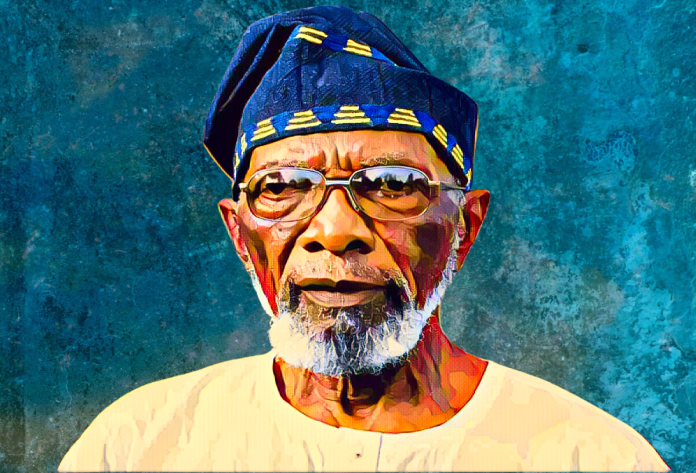
• Renowned academic Samuel Olusegun Osoba has died at the age of 92 at his residence in Ijebu Ode, Ogun State.
• He was widely respected for his work on economic history, political economy, and critiques of capitalism and neo-colonialism in Nigeria.
• Tributes have continued to pour in as scholars and institutions reflect on his decades-long contribution to education and national development.
The academic community has been thrown into mourning following the death of Professor Samuel Olusegun Osoba, a respected Nigerian scholar and chairman of the Yusufu Bala Usman Institute, who passed away on Wednesday at his home in Ijebu Ode, Ogun State, at the age of 92.
His death was confirmed in a statement issued by the institute’s director, Norma Perchonock, who described the news as deeply painful but also reflective of a life dedicated to scholarship and public service.
Professor Osoba was widely regarded as one of Nigeria’s leading intellectuals, with a long academic career focused on economic history and political economy.
His research frequently examined the structures of capitalism and neo-colonial influence in Nigeria, with a strong emphasis on how these systems shaped national development and economic independence.
Over the years, he published numerous academic works, including books, journal articles, and newspaper essays that extended his influence beyond academic circles into public discourse.
Contributions to Constitutional and Political Thought
One of his most notable contributions was his collaboration with the late Yusufu Bala Usman on the publication “The Minority Report and Draft Constitution for the Federal Republic of Nigeria” in 1976.
The document is widely regarded as a significant contribution to Nigeria’s constitutional debates and governance discussions, especially in the years following independence.
Colleagues and the institute described his work as “groundbreaking,” particularly his critical examination of economic systems and their impact on African development.
According to the Yusufu Bala Usman Institute, Osoba’s scholarship consistently challenged dominant economic narratives and offered alternative perspectives on development and national sovereignty.
The institute noted that his work helped shape generations of students, researchers, and policymakers who engaged with his ideas on economic justice and structural transformation.
“Segun is gone, but he has left an enduring legacy and a shining example for patriotic Nigerians to emulate,” the institute said in its tribute.
Following news of his passing, tributes have begun to emerge from academic circles, colleagues, and institutions who described him as a fearless intellectual and committed teacher.
Many praised his dedication to using scholarship as a tool for social change and national development.

