

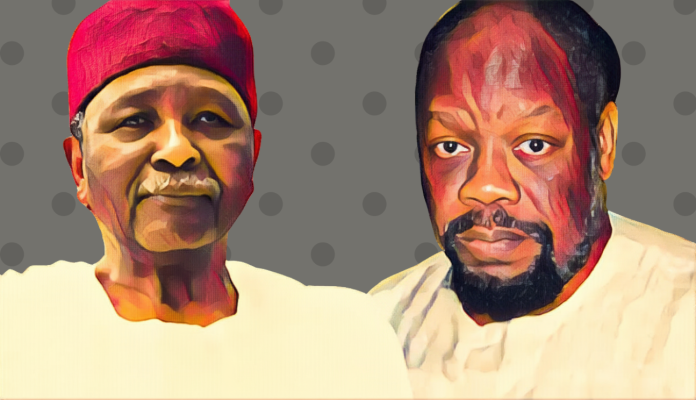
KEY POINTS
- Gowon’s memoir accuses Ojukwu of frustrating every move to avoid civil war.
- He says Ojukwu presented his own reading of the Aburi Accord as binding.
- Gowon defends the war as a fight to keep Nigeria united, not to punish a people.
Former Head of State Yakubu Gowon has accused the late Biafran leader, Chukwuemeka Odumegwu Ojukwu, of frustrating every effort to keep Nigeria from civil war. Gowon makes the charge in his new autobiography, My Life of Service and Allegiance, and he places the blame for the failed Aburi Accord squarely on Ojukwu. Meanwhile, the memoir reopens one of the most painful chapters in the nation’s history.
Inside the failed Aburi Accord
Gowon writes that both sides met in Aburi, Ghana, in January 1967, while distrust within the military was already deepening. Ghana’s then-leader, Lt. Gen. Joseph Arthur Ankrah, brokered the meeting, which drew Nigeria’s top officers at a moment of acute strain. Specifically, Gowon says the federal government went to the talks hoping to save the federation. “We went to Aburi with open minds and with the sincere hope of finding a basis for national reconciliation,” he wrote. However, the two delegations left Ghana with very different readings of what they had agreed.
According to Gowon, Ojukwu then presented his own version as the binding accord. Moreover, he argues that Ojukwu’s reading would have stripped the federal government of real authority and left Nigeria too weak to survive as one country. The former ruler insists that he negotiated in good faith throughout. Indeed, the autobiography revives a long debate over whether Aburi was Nigeria’s last real chance for peace.
Killings and collapsing trust
Gowon also revisits the 1966 coups and the killings of Igbos in the north that followed. He admits the massacres troubled him deeply and made national reconciliation far harder. “I understood the fears of the Easterners. But the breakup of Nigeria was never an option I could accept,” he wrote.
As tension rose, he says, communication between the two camps steadily broke down before Biafra’s declaration on May 30, 1967. Consequently, compromise slipped further out of reach. “We were confronted with a situation in which compromise was becoming almost impossible,” he wrote.
Defending the war and its aftermath
Gowon defends the creation of 12 states shortly before the declaration, saying the move answered minority fears of domination. Additionally, he rejects claims that his government wanted war, insisting confrontation became unavoidable only after Ojukwu declared Biafra. “Ojukwu’s declaration of Biafra left the federal government with no choice,” he wrote.
The former leader also stands by his “No Victor, No Vanquished” policy at the war’s end in January 1970. While the conflict claimed millions of lives, he says the country needed reconciliation rather than revenge. “We fought to keep Nigeria one, not to destroy a people,” he wrote.
Ojukwu, however, maintained until his death in 2011 that Biafra arose out of necessity, after the Nigerian state failed to protect Easterners. Now, Gowon’s memoir offers a sharply different account, and it puts responsibility for the failed peace talks on the late Biafran leader. “We exhausted every peaceful avenue available to us. But Nigeria had to survive,” he wrote.

