

KEY POINTS
- FG launched a Net-Zero Investment Plan targeting carbon neutrality by 2060.
- German partners pledged 71 million euros and a 300 million euros credit guarantee.
- The plan targets power, transport, agriculture, waste and industry.
The Federal Government has launched a Net-Zero Investment Plan that sets 2060 as Nigeria’s target for carbon neutrality, while tying climate action to economic growth. Budget and Economic Planning Minister Abubakar Atiku Bagudu unveiled the net-zero plan in Abuja on Wednesday, framing it as the country’s roadmap to net-zero greenhouse gas emissions. Moreover, he placed the policy at the center of Nigeria’s long-term economic strategy.
What the net-zero plan covers
Nigeria first promised to reach net zero by 2060 at the COP26 summit in 2021, and the new plan now spells out how the country can get there. Bagudu said it maps how Nigeria can cut emissions without stalling development. Specifically, it targets power, transport, agriculture, waste and industry, the sectors that drive most of the country’s carbon output. Additionally, the plan promises support for women, youth and small businesses, which the minister cast as a push for inclusive, low-carbon growth.
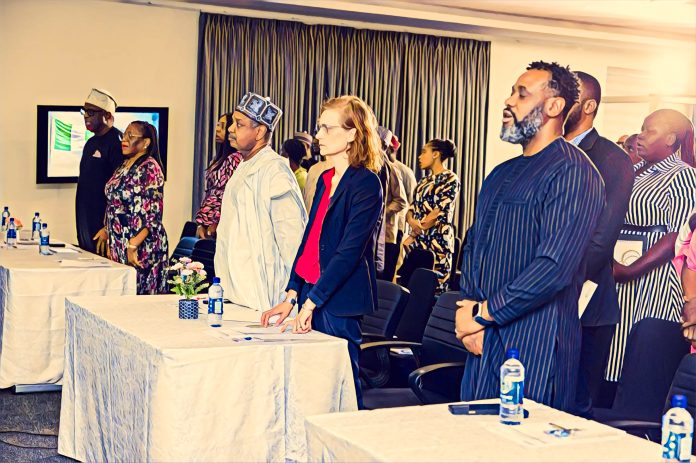
The launch drew senior officials, development partners and private investors. Indeed, Bagudu used the platform to reassure businesses chasing project finance. He said Nigeria is willing to back initiatives that affect the private sector, rather than shy away from them. Therefore, the government wants policy and private money to move in the same direction.
German backing and constitutional roots
Bagudu also pointed to fresh foreign support. Recently, talks with German partners secured 71 million euros in contributions and a 300 million euros credit guarantee for climate-aligned investments. Consequently, the net-zero plan launches with real money behind it, not just targets on paper.
The minister grounded the policy in Nigeria’s constitution. Specifically, he noted that Section 20 requires environmental protection, while Section 13 spreads that duty across every arm of government. He added that the country’s Agenda 2050 treats sustainability as central to national planning, not an afterthought. Meanwhile, he said hard lessons from oil pollution in Ogoniland now shape tougher regulation, better technology and cleaner farming.
From policy to bankable projects
Germany welcomed the plan as a Nigerian-led effort. Dr Karin Jansen, who heads international cooperation at the German Embassy, said the government built it through wide consultation with experts, civil society and business groups. “This investment plan is, above all, a Nigerian initiative, and Germany is proud to support it through funding and technical cooperation under the International Climate Initiative,” she said.
Jansen argued that the plan signals Nigeria’s readiness to attract global climate finance and deepen cooperation on energy transition and emissions cuts. However, she stressed that the hard part now begins. The focus, she said, must shift to execution, turning the strategy into bankable projects that deliver measurable results for ordinary Nigerians. Many Nigerians still lack steady power, so cleaner energy must widen access too, not simply cut emissions.
Together, the officials framed the net-zero plan as both a climate commitment and an economic bet, one that ties Nigeria’s 2060 ambition to jobs, investment and cleaner growth.

