

KEY POINTS
- NEMA repatriated 497 Nigerians stranded in Niger Republic, landing them in Kano.
- Officials said the return was voluntary, arranged with the Foreign Affairs Ministry and IOM.
- Returnees described deadly desert crossings and robberies on the route to Libya.
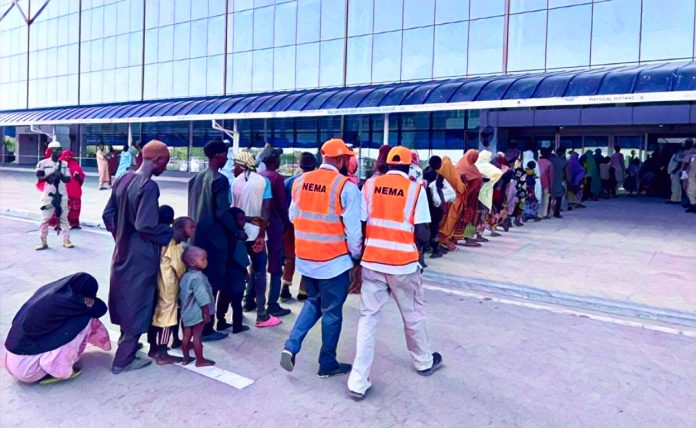
The National Emergency Management Agency has flown home 497 Nigerian returnees stranded in Niger Republic, landing them in Kano on Friday. The migrants arrived at Malam Aminu Kano International Airport around 12:40 p.m. Moreover, officials stressed that the group came home willingly, not through any forced evacuation.
A voluntary, coordinated return
Dr Nura Abdullahi, head of operations at NEMA‘s Kano office, said the Federal Government arranged the trip through the Ministry of Foreign Affairs. Specifically, he described the operation as a tripartite effort involving Nigeria’s mission in Niger, the ministry and the International Organization for Migration. Together, they aimed to bring the stranded Nigerians back safely and with dignity. The IOM has helped thousands of stranded Nigerians return home in recent years through its voluntary program.
The group reflected the scale of the crisis. According to Abdullahi, it included 174 men, 97 women, 137 boys and 89 girls, drawn mainly from Kano, Jigawa, Borno and Kaduna. On arrival, NEMA provided meals, while the Red Cross treated those who needed medical care. Additionally, the National Commission for Refugees, Migrants and Internally Displaced Persons supplied drugs for the sick.
Chasing Libya, finding danger
Abdullahi said most of the Nigerian returnees had set out for Libya in search of work, only to turn back once they grasped how dangerous the route was. Therefore, he urged Nigerians to abandon risky migration, insisting that “no country is better than their country of origin.”
The returnees’ own accounts underscored the warning. Sani Hamisu, from Kano, said he left for Libya after years of financial hardship, hoping to support his family and marry. However, the desert nearly killed him. “Once your water finishes, nobody can help you even with a cup of water,” he said, recalling that many travelers died along the way.
Hamisu said he spent six years doing menial jobs in Libya and came home with nothing. Eventually, the IOM rescued him in the desert and moved him through Niger back to Nigeria. The Sahara crossing and the Mediterranean beyond it have killed thousands of African migrants, according to international agencies.
Pleas for support
Harira Muhammad, a mother of two from Borno, told a similar story. She said she traveled to Libya eight months ago to support her husband, who suffered a leg fracture after a car struck him during a Boko Haram attack. Meanwhile, bandits ambushed her group and seized their money. Now home, she appealed to the government for business grants so families like hers can rebuild.
After verification and profiling, NEMA said it would move the returnees on to their home states. Still, their testimonies leave a hard question for the authorities, since economic hardship keeps pushing many Nigerians toward perilous journeys abroad.

