

KEY POINTS
- Five TCN transmission towers collapsed in Akwa Ibom after critical structural components were allegedly removed by vandals.
- Seven additional towers along the same corridor were found to be structurally compromised and at risk of collapsing.
- TCN has reconfigured the network and begun emergency reconstruction while security agencies investigate the vandalism.
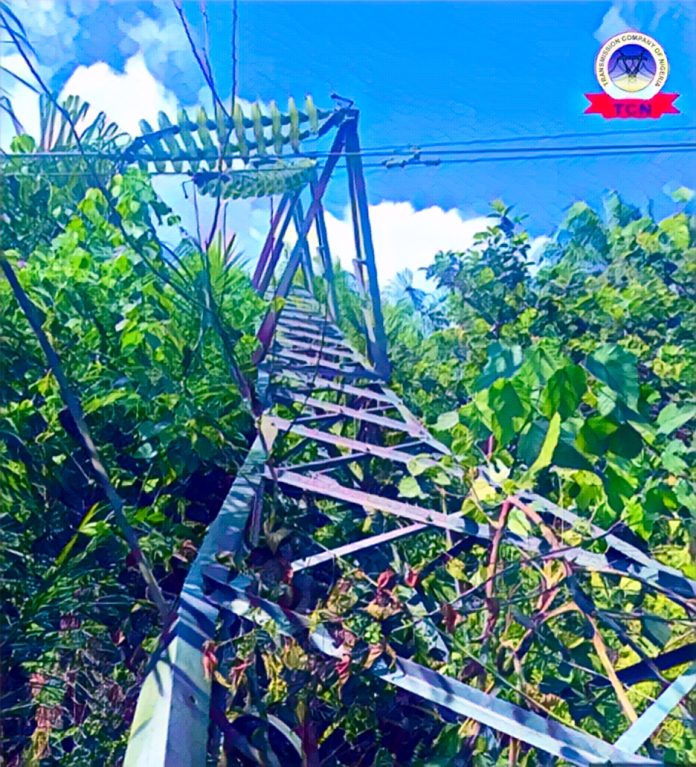
The Transmission Company of Nigeria, TCN, Five electricity transmission towers along the Ikot Abasi-Eket 132kV Double Circuit Transmission Line in Akwa Ibom State have collapsed after critical components were allegedly removed by vandals.
The TCN said the damage has affected the integrity of the transmission corridor and created a risk of further tower collapses.
The company has begun emergency measures to stabilise electricity supply while preparing to reconstruct the damaged sections of the transmission line.
TCN said the damage was discovered on August 9, 2026, during a routine joint patrol of the transmission line by its linesmen.
A preliminary assessment found that critical structural bracing members had been removed from five towers identified as N9, J4, N10, N11 and N12.
The removal of the structural components weakened the towers and eventually caused all five to collapse.
The incident has raised fresh concerns about the vulnerability of Nigeria’s electricity infrastructure to vandalism and theft.
TCN said further inspection of the transmission corridor revealed that the problem was not limited to the five collapsed towers.
Structural components had also reportedly been removed from seven other towers along the same route.
The affected towers were identified as J3, N8, N13, N14, N15, N18 and N19.
According to the transmission company, these towers have been structurally compromised and could collapse if urgent intervention is not carried out.
This has increased the urgency of repair work along the transmission corridor to prevent additional damage and a potentially wider disruption to electricity supply.
TCN reconfigures network to limit disruption
TCN said it had taken steps to minimise the impact of the damaged transmission line on electricity supply in the affected area.
The network has been reconfigured to prioritise power supply to the Ekim Transmission Station.
Under the temporary arrangement, Ibom Power is currently the only station left without supply, according to the company.
TCN said the reconfiguration was intended to maintain electricity supply to as many customers and facilities as possible while emergency repairs are undertaken.
The transmission company said it was mobilising an urgent intervention to reconstruct the affected sections of the line.
The objective is to restore the transmission network to normal operation and prevent further deterioration of the damaged infrastructure.
The reconstruction effort is expected to focus on replacing the collapsed towers and restoring the structural integrity of the other towers that were compromised by the removal of their components.
TCN said security agencies had been notified about the incident to support investigations and prevent additional acts of vandalism along the transmission route.
The company described the destruction of the infrastructure as an act of sabotage and called for greater vigilance around critical electricity facilities.
The involvement of security agencies is expected to help identify those responsible for removing the tower components and strengthen protection of the transmission corridor.
The incident adds to the long-running challenge of vandalism facing Nigeria’s electricity infrastructure.
Transmission towers, electricity cables, transformers and other components have repeatedly been targeted by individuals seeking to steal valuable materials or deliberately disrupt electricity infrastructure.
Such attacks can have consequences beyond the immediate location of the damaged equipment, as faults on transmission lines can affect the ability of power generation and distribution systems to deliver electricity to consumers.
The Akwa Ibom incident demonstrates the potential scale of the problem, with five towers already down and seven others considered vulnerable

