

Nigeria’s federal government has pitched its Renewed Hope housing partnership with private developers to delegations from 36 African countries, saying about $39 million in public concessionary funding has helped unlock roughly $125 million in private investment.
The presentation came at the second Forum for Public-Private Partnership Units in Africa, a two-day meeting at the Africa Hall of the U.N. Economic Commission for Africa in Addis Ababa, Ethiopia. The commission, the African Development Bank and the African Legal Support Facility organized it under the theme “Making Social Sector PPPs Work: From Policy Ambition to Effective Service Delivery.”
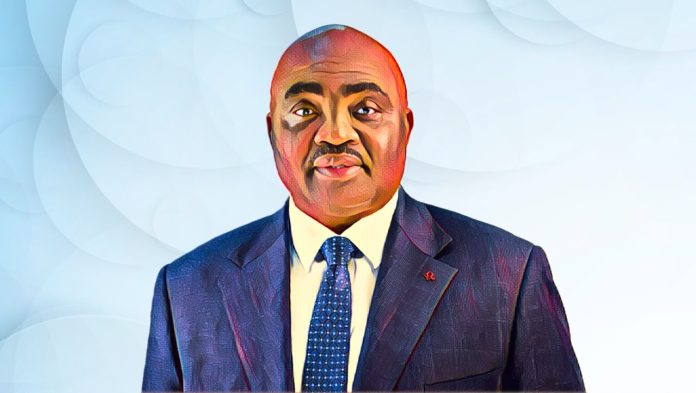
Jobson Ewalefoh, director general of Nigeria’s Infrastructure Concession Regulatory Commission, led the presentation. He said the arrangement departs from the usual approach. “The beauty of this PPP structure is that it is not the conventional PPP,” he said. The private partner supplies the land, designs the scheme, raises the financing and builds the homes. The government’s job, the commission said, is to lower the risks and make the project commercially workable. “Government does not need to finance housing capital projects,” the commission said in a statement.
The model targets 100,000 homes in selected Nigerian cities. To pull in investors, the government has named middle-income federal civil servants as the intended buyers, promised access roads to semi-urban sites and negotiated sale prices with the developer. Each buyer is limited to one unit to discourage speculation.
The financing comes in layers. About $19 million in single-digit-interest funding is flowing through the Federal Mortgage Bank of Nigeria, and about $20 million in concessionary loans through the Family Homes Fund. A further $112 million from the MOFI Real Estate Investment Fund is meant to lower mortgage rates for buyers. The government estimates the combined steps cut the project’s effective cost by about 30%, a figure that has not been independently verified. Commercial lending rates in Nigeria run above 23%, the commission said.
Nigeria was one of five countries chosen to present at the forum’s project clinic, along with Malawi, Kenya, Djibouti and Ivory Coast. Many delegates asked how the off-taker guarantee and concessionary finance could be adapted to their own markets, though the reports did not name which countries showed interest. The Nigerian team said it also took lessons on structuring and risk allocation that could shape its wider social sector pipeline. The forum began in 2024 with more than 30 African PPP units and focused then on climate-resilient infrastructure.
Many details remain unclear. The reports do not name the developer or the cities involved, and they give no completion timeline or unit prices. They also do not explain how the $125 million relates to the 100,000-home target. One report added the three funding amounts to about $151 million, which does not match the $125 million figure.
The pitch comes as Nigeria looks to partnerships to ease a housing shortage. In June, the government said more than 15,000 units were under construction across its housing programs, including a 1,500-unit Renewed Hope City project in Kano State.