

KEY POINTS
- Nigeria threatens to sanction agency heads who award contracts outside procurement law.
- Akume says breaches have led to inflated contracts and weak oversight.
- The bureau says benchmarking saved about 1.4 trillion naira in 18 months.
Nigeria’s federal government has threatened to sanction heads of state-owned enterprises and agencies that keep awarding inflated contracts outside the country’s procurement law, according to a circular obtained by The Punch newspaper.
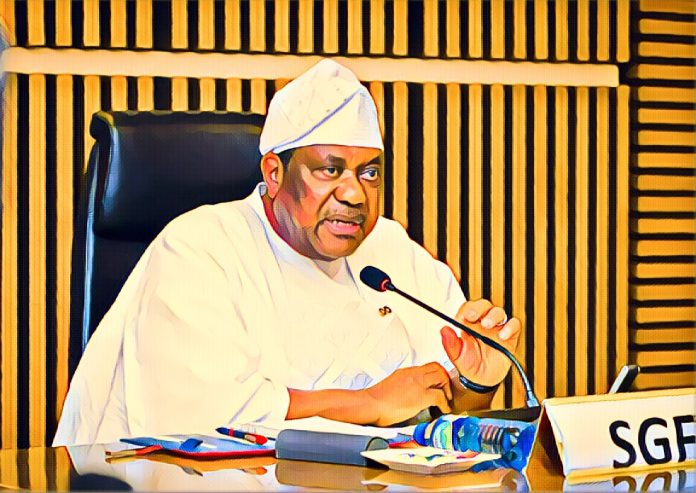
George Akume, secretary to the government of the federation, sent the warning to ministers, permanent secretaries and agency chiefs, among other senior officials. In it, he said many government-owned enterprises and corporations still award contracts without following the Public Procurement Act of 2007. But a 2020 amendment through the Finance Act had already brought them under its rules.
The result, Akume said, has been contract sums above approved price benchmarks, captive markets for favored contractors and little regulatory oversight. “This non-compliance is unacceptable and will no longer be tolerated,” he said.
Accounting officers on the hook for inflated contracts
Under the directive, every federal enterprise, corporation, council, authority and commission that spends public money must run its procurement in line with the act. Heads of those bodies, who also serve as accounting officers, must also work with the Bureau of Public Procurement for guidance.
The government will sanction any accounting officer who keeps awarding contracts outside the law, the circular said. Akume also ordered that it reach all accounting officers for immediate and strict compliance.
Since the 2020 amendment, Section 15 of the law has covered government-owned enterprises that use public funds. Meanwhile, Section 20 makes accounting officers responsible for compliance in their institutions.
Part of a wider crackdown
The warning is the latest in a string of moves to tighten spending controls. In October 2025, Akume circulated a Federal Executive Council directive ordering strict application of the act across federal institutions. Then last month, the government introduced a mandatory 14-day standstill period between announcing a contract award and signing it, so losing bidders can seek clarification or file complaints.
Contractors found guilty of fraud, document falsification or persistent failure to deliver also now face bans of three to five years from federal procurement.
In May, the bureau also stopped ministries, departments and agencies from processing upward revisions of contract sums without its certification. That rule replaced a 2013 framework that required presidential approval only for variations above 15% of the original sum or 1 billion naira.
Still, officials say the reforms are paying off. In August, bureau Director-General Adebowale Adedokun said price benchmarking had saved the government about 1.4 trillion naira in 18 months. The bureau had earlier reported savings of more than 303 billion naira, $304.9 million and 1.74 million euros from January to September 2025, although those figures rest on its own assessment.