

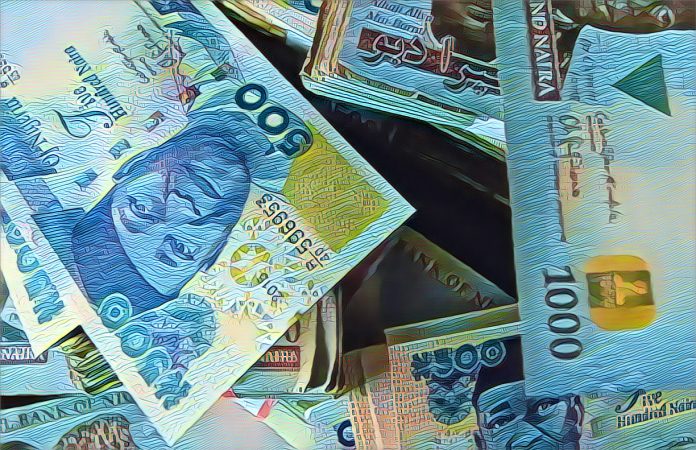
Nigeria, Africa’s largest economy, is facing a serious economic crisis as its business activity contracted for the second consecutive month in October 2023, according to a survey by Stanbic IBTC Bank. The bank’s Purchasing Managers’ Index (PMI) fell to 48.9 in October from 49.6 in September, indicating a decline in output, new orders, employment, and inventories. A reading below 50 signals contraction, while a reading above 50 signals expansion.
The survey attributed the contraction to the persistent shortage of foreign exchange, which has made it difficult for businesses to import raw materials and equipment. The naira, Nigeria’s currency, has depreciated by more than 40% against the US dollar since January 2023 as the Central Bank of Nigeria (CBN) struggles to defend its value amid dwindling oil revenues and rising inflation. The CBN has imposed several restrictions on access to foreign exchange, such as banning the use of dollars for certain imports and limiting the amount of dollars that can be withdrawn from banks.
The shortage of foreign exchange has also affected the prices of goods and services, as businesses pass on the higher costs to consumers. The survey reported that input prices rose the fastest since the series began in June 2014, while output prices also increased sharply. This has eroded the purchasing power of Nigerians, who are already grappling with high unemployment, poverty, and insecurity. The inflation rate rose 19% in September 2023, the highest since April 2017.
The contraction in business activity has also dampened the prospects of economic recovery as Nigeria tries to overcome the impact of the COVID-19 pandemic and the recession of 2020. The International Monetary Fund (IMF) has projected that Nigeria’s economy will grow by 2.3% in 2023, down from 3.4% in 2022 and below the population growth rate of 2.6%. The IMF has urged the Nigerian authorities to implement structural reforms, such as removing fuel subsidies, increasing tax revenue, and improving governance, to boost growth and reduce vulnerabilities.
However, some analysts have expressed optimism that Nigeria’s economy will rebound in the coming months as the government implements its Economic Recovery and Growth Plan (ERGP), which aims to diversify the economy away from oil dependence and invest in infrastructure, agriculture, and human capital development. The government has also secured loans from various sources, such as the World Bank, the African Development Bank, and China, to finance its budget deficit and support its development projects.
The ERGP also envisages a more flexible exchange rate regime that will allow market forces to determine the value of the naira and ease the pressure on the foreign exchange market. The CBN has hinted that it will adopt a unified exchange rate system by December 2023, which will eliminate the multiple exchange rates that currently exist and improve transparency and efficiency.
Source: Businessday NG

