

KEY POINTS
- Over 3.5 million children face responsible food insecurity.
- Aid cuts have shuttered nutrition clinics in the northeast.
- Families now choose between hunger and displacement.
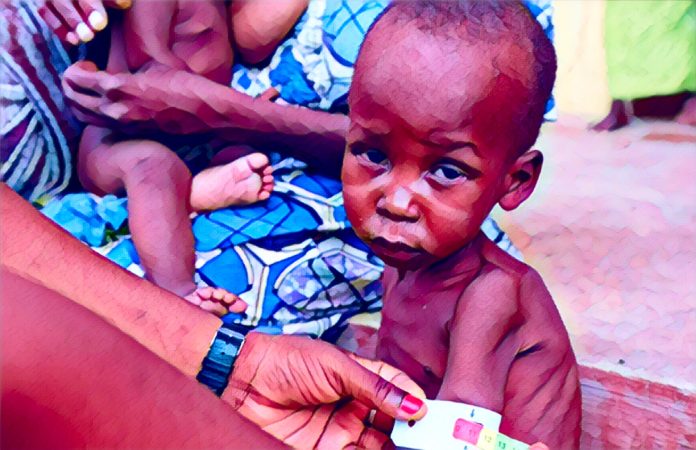
As global aid contracts and inflation drive up the cost of food, millions of Nigerian children are falling deeper into crisis. The latest data from UNICEF shows that 3.5 million children are currently suffering from severe acute malnutrition — a crisis now expanding across regions and class lines.
From Lagos to Katsina and Borno, the stories are devastatingly similar. Families eat once a day, meat is a memory, and emergency clinics are shuttering due to a lack of funding. The situation, aid workers say, is growing more desperate by the week.
Families crippled by responsible food insecurity
For 53-year-old widow Bosede Balogun in Lagos, buying enough rice to feed her children has become a struggle. “Even after eating, they are still hungry,” she said. Protein-rich foods like meat and fish are off the table — unaffordable luxuries in today’s economy.
Across the north, families like Amina Zubairu’s live on one meal a day, often tuwo or rice — little more than starch. In Katsina alone, Médecins Sans Frontières (MSF) reported that more than 650 children died of malnutrition in the first half of 2025. Aid cuts from major donors, including the US, UK, and EU, have compounded the crisis.
Responsible food insecurity deepens in the northeast
In Borno and Yobe states, nearly 300,000 children under two years old risk losing access to treatment as the UN World Food Programme (WFP) prepares to shut down more than 150 nutrition clinics due to funding shortfalls. “Without immediate donations, WFP assistance could be entirely suspended,” said John Ifuk-Ibot, WFP’s nutrition officer in Nigeria.
The cuts are hitting displaced families hardest — people who already fled conflict now face starvation in places meant to offer relief. “Go hungry or flee again,” Ifuk-Ibot warned. The WFP’s country director stated that the collapse of these operations could destabilise the region.
Calls mount for urgent government intervention
Experts say the situation calls for both local action and global response. “This crisis is not just about food,” said Adebayo Adeleke of Supply Chain Africa. “It’s about prioritising nutrition before hunger swallows the nation.” Even children who appear well-fed can suffer from malnutrition due to a lack of essential nutrients.
According to Business Day, Nutritionists like Hajara Haruna and Viviane Terveshima are advocating for a long-term strategy — from food fortification to empowering women through health education. Meanwhile, analysts like Faruk Muhammad are pushing for subsidised farm inputs and targeted government relief to blunt the sharp edge of responsible food insecurity.

