

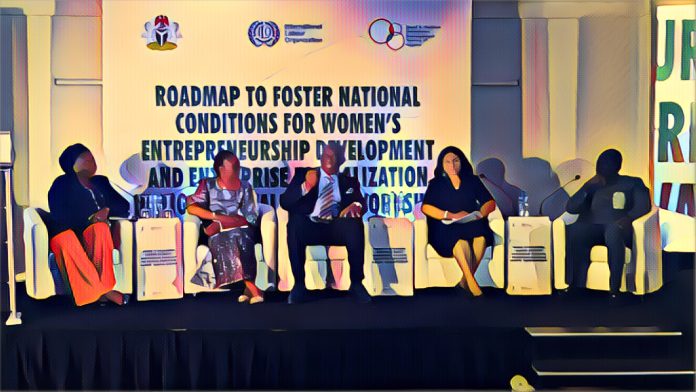
Nigeria has unveiled a new plan to support women entrepreneurs and formalize their businesses, in a bid to foster gender equality and economic growth.
The plan, which was validated by a consortium of stakeholders, including the government, the International Labour Organization (ILO), and various financial and business institutions, outlines a three-year strategy to create an enabling environment for women’s entrepreneurship development (WED) and enterprise formalization in Nigeria.
The plan is based on six key pillars: gender-sensitive legal and regulatory systems, policy leadership, access to financial services, business development support, market and technology access, and representation of women in policy dialogue.
The plan aims to address the specific challenges faced by women entrepreneurs, such as lack of access to capital, skills, markets, and networks, as well as social and cultural barriers. It also recognizes the potential of women entrepreneurs to contribute to Nigeria’s socio-economic development, especially amid the COVID-19 pandemic and its aftermath.
The plan was developed through a participatory and evidence-based process, involving consultations, surveys, and analysis of the current situation and best practices of WED and formalization in Nigeria and other countries.
The validation workshop, which took place in Abuja on September 29, 2023, brought together high-level representatives from about 50 institutions, who expressed their commitment to implementing the plan under the coordination of the Small and Medium Enterprises Development Agency of Nigeria (SMEDAN).
The workshop also featured testimonies from women entrepreneurs who shared their stories of success and challenges in running their businesses. They highlighted the need for tailored support and mentorship to overcome the obstacles and grow their enterprises.
The plan is part of the ILO’s project “Promoting Gender Equality Through Women’s Entrepreneurship Development and Enterprise Formalization in Nigeria”, which is funded by the Government of Japan. The project aims to enhance the capacity of SMEDAN and other stakeholders to promote WED and formalization, as well as to empower women entrepreneurs through training, coaching, and networking.
The plan is expected to have a positive impact on the lives and livelihoods of women entrepreneurs and their families, as well as on the overall economy and society of Nigeria. It is also aligned with the national and international frameworks and goals, such as the National Policy on Micro, Small and Medium Enterprises, the African Continental Free Trade Area, and the Sustainable Development Goals.
Source: ILO

