

Key Points
-
AU peace and security meeting highlights regional cooperation.
-
Experts push for early warning systems across Africa.
-
AU peace and security dialogue emphasizes African-led stability.
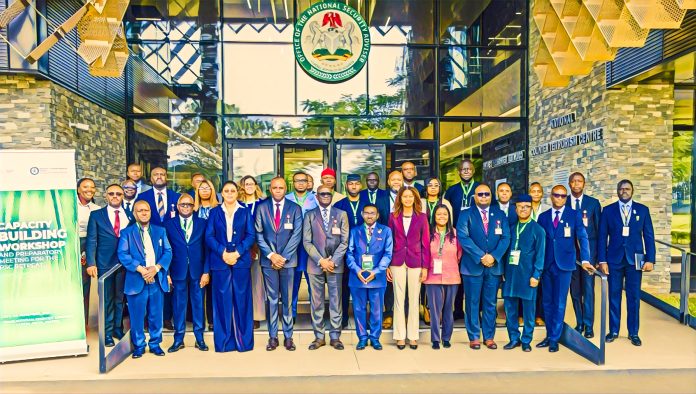
This week, experts, policymakers, and peace strategists from the African Union (AU) met in Abuja to talk about Africa’s collective security system and make new promises to stop conflicts from happening across the continent.
The African Union Peace and Security Council (PSC) and Nigeria’s Ministry of Foreign Affairs worked together to put on the three-day forum. Delegates from more than 30 member states, regional economic communities, and international partners were there.
The AU’s peace and security talks are the most important thing right now
Bankole Adeoye, the AU Commissioner for Political Affairs, Peace, and Security, started the meeting by saying that the rising number of coups, armed uprisings, and political instability could undo years of progress in governance and integration.
He asked for “a smarter, African-led peace strategy that puts early detection, quick response, and peacebuilding for all at the top of the list.”
Adeoye stressed that the AU’s Continental Early Warning System (CEWS) needs to be improved so that problems can be stopped before they get worse.
Yusuf Maitama Tuggar, Nigeria’s Minister of Foreign Affairs, said in his speech that the country’s hosting of the forum shows its long-term commitment to stability on the continent.
He talked about Nigeria’s record of keeping the peace in West Africa and told African governments to spend more money on diplomacy that stops conflicts before they start instead of after they start.
Making African solutions stronger for African problems
The main topic of conversation at the forum was the African Peace and Security Architecture (APSA), which is a set of rules that the AU follows to stop and deal with conflicts.
Participants talked about how to make the structure work better even though there wasn’t much money and there were different political interests.
Experts from the Economic Community of West African States (ECOWAS), the East African Standby Force, and the Southern African Development Community (SADC) talked about how to work together to build peace in communities and send troops together.
Professor Comfort Ero, who is the President of the International Crisis Group, said, “African security challenges need cooperation, not competition.”
She told the AU to “move from declarations to coordinated action, with member states showing real political will.”
AU experts on peace and security are taking a different path
The United Nations Office to the African Union (UNOAU) and the European Union Mission to the AU also sent people to the meeting. They promised to keep supporting African-led interventions.
Francis Okello of UNOAU said that the AU has made progress in dealing with conflicts in Sudan, Somalia, and the Sahel, but that financing and follow-up mechanisms need to be more consistent.
The meeting ended with a decision to improve cooperation between the AU, regional organisations, and member states in order to strengthen early warning networks, encourage dialogue, and move forward with inclusive peacebuilding.
Delegates also asked for changes to the AU Peace Fund to make sure that security operations on the continent can be funded in a way that lasts.
People who watch politics think that the AU peace and security meeting in Abuja could affect how future interventions are carried out and show that Africa can solve its own problems.
The final statement, which is expected to be approved later this week, will spell out specific steps to make African peace processes more effective and more homegrown.

