

KEY POINTS
- EU Nigeria defence cooperation is expanding beyond military assistance.
- Nigeria’s security challenges are driving deeper EU engagement.
- EU Nigeria defence cooperation includes peacebuilding and governance support.
The European Union and Nigeria are moving to strengthen defence ties as part of wider efforts to respond to the country’s increasingly complex security challenges, underscoring Abuja’s strategic importance to Europe.
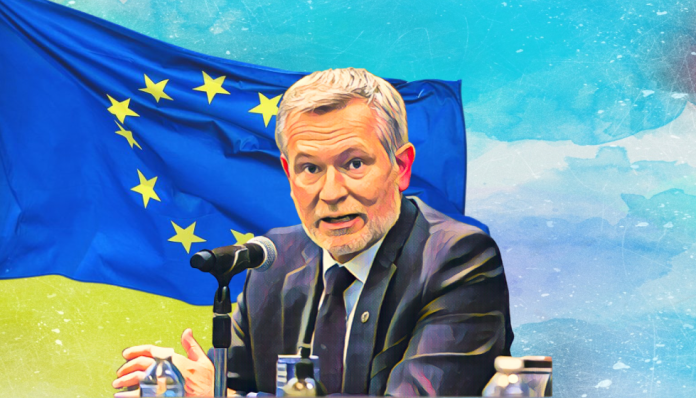
The renewed push was highlighted on Wednesday when the EU Ambassador to Nigeria and ECOWAS, Gautier Mignot, paid a courtesy visit to Nigeria’s Chief of Defence Staff, General Olufemi Oluyede, at the Defence Headquarters in Abuja. Mignot congratulated Oluyede on his recent appointment and reaffirmed the bloc’s commitment to supporting Nigeria’s security and stability.
Nigeria remains a central partner for Europe in West Africa, Mignot said, noting that 19 of the EU’s 27 member states currently maintain diplomatic missions in the country — a measure of its political and economic significance.
EU Nigeria defence cooperation widens scope
Mignot said the EU’s engagement with Nigeria extends beyond traditional military assistance, pointing to several EU-funded non-kinetic programmes focused on peacebuilding, conflict prevention and long-term stability across the country.
According to the ambassador, the union’s support also spans governance reforms, political processes and institutional strengthening, particularly at a time he described as both complex and demanding for Nigeria.
He added that Brussels stands ready to deepen cooperation in areas that directly enhance security while supporting sustainable peace. The comments signal a broader shift in European security partnerships in Africa, as Europe increasingly prioritises institutional resilience alongside defence capacity.
EU Nigeria defence cooperation gains urgency
Responding, Oluyede welcomed the EU’s continued support and said he was familiar with many of the union’s ongoing interventions in Nigeria. He praised the EU’s willingness to engage directly with Nigeria’s security architecture, rather than focusing primarily on the Multinational Joint Task Force operating in the Lake Chad region.
The defence chief urged authorities to fast-track proposed areas of cooperation, stressing that Nigeria faces multiple security threats across its regions, from insurgency and banditry to communal violence and transnational crime.
He said timely and enhanced EU assistance would be critical in helping the Armed Forces and other security agencies respond more effectively to these challenges, particularly as pressures on personnel and resources continue to mount.
The discussions point to a gradual deepening of EU Nigeria defence cooperation, as both sides seek to align security engagement with broader development and governance objectives.

