

Key Points
-
Transport fares rise across all categories.
-
Okada fares lead transport fares rise.
-
Regional disparities shape commuting costs.
The National Bureau of Statistics says that transport costs in Nigeria went up even more in October 2025, putting even more pressure on families as commuters paid more for travel by road, air and water.
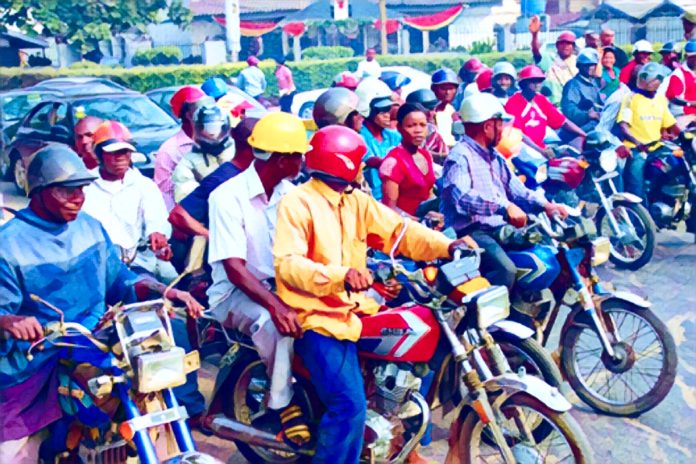
The NBS Transport Fare Watch report showed that average fares went up in all major transport categories. The biggest increase was in motorcycle transport, which is commonly known as ‘okada’.
The rise is due to a number of factors, including higher operating costs, fluctuating fuel prices, and rising inflation that is still affecting disposable incomes across the country.
Prices for transport go up on major routes
In October, the average fare for city buses for people who live in the city went up by 0.90 percent from September to 1,058.64 naira. In September, the fare was 1,049.17 naira. City bus fares went up 16.57 percent from 908.15 naira in October 2024 to 1,058.64 naira in 2025.
Travel between cities was similar. The average cost of a bus ride on a state route went up 1.55% from month to month to 8,170.21 naira. Intercity fares went up 13.67 percent from the same time last year, showing that long-distance travel costs are still going up.
The rise in transport fares is led by Okada fares
Motorcycle transport saw the biggest rise of all the categories. Average okada fares went up 5.74 percent from one month to the next, reaching 780 naira. Year over year, they went up 45.53 percent from 535.98 naira in October 2024.
Experts say that the big increase is due to higher fuel costs, higher maintenance costs, and more people wanting motorcycles as a way to avoid crowded public transportation in cities.
The cost of flying also went up. The average price of a single trip went up 1.32% from month to month to 131,557.53 naira. Prices also went up 4.17% from year to year from 126,293.05 naira.
Water transport fares went up 3.11 percent from month to month to 1,851.28 naira and 25.25 percent from year to year. This shows that costs are going up on river and coastal transport routes.
Prices for transport go up at different rates in different areas
Data from the state level showed big differences. The cost of a bus ride between cities was highest in Oyo, at 10,200.19 naira, and lowest in Kwara, at 6,059.65 naira. Lagos had the highest city bus fare at 1,405.85 naira, Rivers had the highest air fare at 155,750.59 naira, and Ogun had the highest motorbike fare at 1,204.31 naira.
The South West was the most expensive area for city buses, intercity travel, air travel, and motorcycles, according to zonal analysis. The South South had the highest water transport fares, while the South East and North East stayed among the least expensive regions in a number of categories.

