

KEY POINTS
- The House passed the 2026 Appropriation Bill for N58.18 trillion.
- In the budget, capital investment is more than recurring spending.
- Allocations are led by security, infrastructure, and human capital.
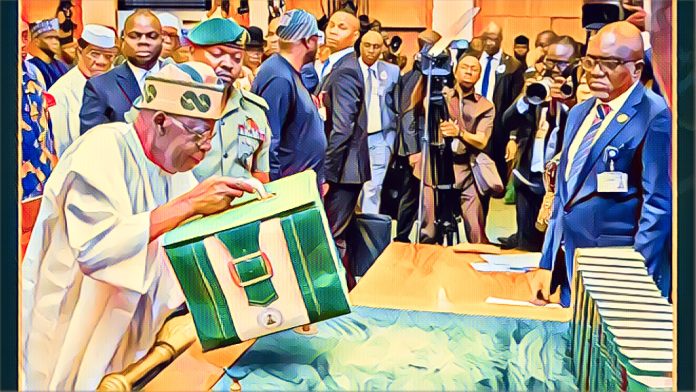
The House of Representatives in Nigeria has adopted President Bola Tinubu’s 2026 Appropriation Bill. This bill includes a N58.18 trillion spending plan that aims to improve security, stabilize the economy, and encourage more capital investment.
The National Assembly got the budget, called The Budget of Consolidation, Renewed Resilience, and Shared Prosperity, on December 19, 2025. Lawmakers called it a key step in the government’s plan to fix Nigeria’s economy after years of fundamental problems.
House Leader Julius Ihonvbere led the debate on the general principles. He argued that the Tinubu administration took over institutions that were already weak and warned against expecting quick or easy adjustments. He warned lawmakers that making tough policy decisions and sticking to a strict budget were necessary for long-term growth.
Ihonvbere used growing macroeconomic indicators to support the passing of the 2026 Appropriation Bill. These included a 3.98 percent increase in economic growth, a drop in inflation from around 25 percent to 14.45 percent, better revenue performance, and more foreign investment.
Lawmakers stand behind the assumptions in the 2026 Appropriation Bill
Ihonvbere says that the naira has stabilized around N1,400 per dollar, which is better than the levels above N1,800 that it was at earlier in the reform cycle. He stated that external reserves had reached around $47 billion, the greatest level in seven years, which is enough to cover more than ten months of imports.
He also noted that since assuming office, the government has not relied on the central bank to cover deficits. This, he said, helped rebuild trust and ease inflationary pressure.
The 2026 Appropriation Bill says that total revenue will be N34.33 trillion and total spending will be N58.18 trillion, leaving a deficit of N23.85 trillion. Non-debt recurrent spending is expected to be N15.25 trillion, while capital expenditures is expected to be N26.08 trillion, which is more than recurrent appropriations.
Politicians said the change meant a break from prior budgets where spending on things like food and clothing squeezed out investment. They also stated that more capital spending would boost long-term growth.
Sector priorities in the 2026 Appropriation Bill
The budget assumes that the price of oil will be $64.85 per barrel and that output will be 1.84 million barrels per day. The biggest amount, N5.41 trillion, went to security and defense. This also shows that the government is trying to deal with threats to food supply and safety.
The government planned to spend N3.56 trillion on infrastructure, N3.54 trillion on education, and N2.48 trillion on health. Lawmakers also mentioned further diplomatic and commercial ties, like reaching out to Turkey, as part of their efforts to draw in investors and make the business climate better.
Finally, after some discussion, the Speaker called for a voice vote on the bill. The MPs then voted to approve the budget for a second reading. The House adjourned plenary for two weeks so that the budget could be defended in detail.

