

KEY POINTS
- CJN warns against blanket corruption allegations.
- NJC will discipline erring judicial officers.
- New judges urged to guard independence.
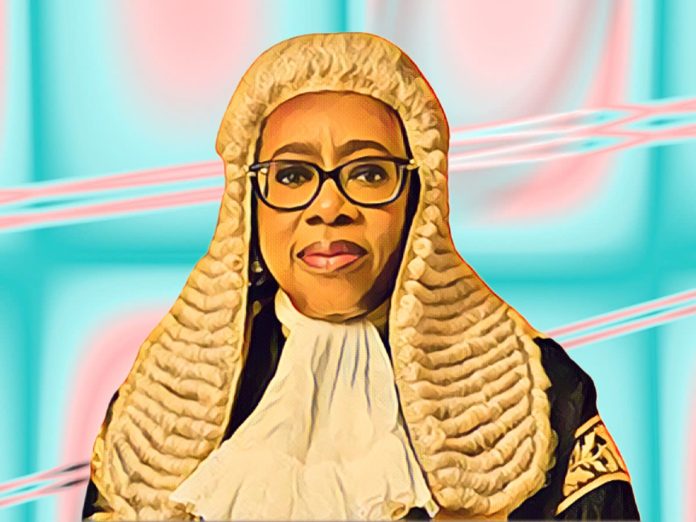
Chief Justice of Nigeria Kudirat Kekere-Ekun on Wednesday cautioned against sweeping claims of corruption against the judiciary, saying allegations must be specific and supported by evidence.
Speaking after swearing in 14 newly appointed judges of the Federal High Court, the CJN said a pattern of broad attacks on the institution risked undermining public confidence and weakening the rule of law.
She stressed that while the judiciary does not claim infallibility, accountability mechanisms remain in place through the National Judicial Council (NJC), which she said would discipline any judicial officer found culpable.
CJN Warns Against Blanket Corruption Allegations
In addition “It has become fashionable in some quarters to deploy blanket allegations of corruption against the institution as a whole,” Kekere-Ekun said. “While constructive criticism is legitimate in a constitutional democracy, indiscriminate denunciation is neither fair nor responsible.”
The CJN said when corruption is alleged without specificity or recourse to established complaint procedures, the consequences extend beyond individual cases. Such claims, she noted, erode public trust, weaken institutional authority and cast further doubt on the integrity of judges with long-standing records of service.
“The National Judicial Council remains vigilant and will not hesitate to discipline any judicial officer found wanting,” she said. “Accountability is indispensable to judicial independence. But independence itself must be protected from careless assault.”
Call for Judicial Discipline and Integrity
While addressing the newly appointed judges, the CJN reminded them that their elevation would bring heightened scrutiny and amplified public commentary.
“You must not allow either praise or criticism to distract you from your constitutional duty,” she said, urging them to ensure their judgments are clear and their conduct beyond reproach.
She also warned against subtle pressures that may arise in social, political or financial forms, advising the judges to guard their independence and maintain distance from relationships that could compromise public perception. “Remember always that perception, in judicial life, is almost as powerful as reality,” Kekere-Ekun said.
Finally, the remarks come amid renewed public debate over judicial accountability, with the CJN maintaining that criticism must remain responsible to preserve institutional credibility.

