

KEY POINTS
- Top opposition leaders are meeting in Abuja to present a joint position on controversial aspects of the Electoral Act.
- The gathering includes former governors, senators, and party executives from multiple political platforms.
- The law currently permits candidate selection through direct primaries, delegate systems, or consensus agreements.
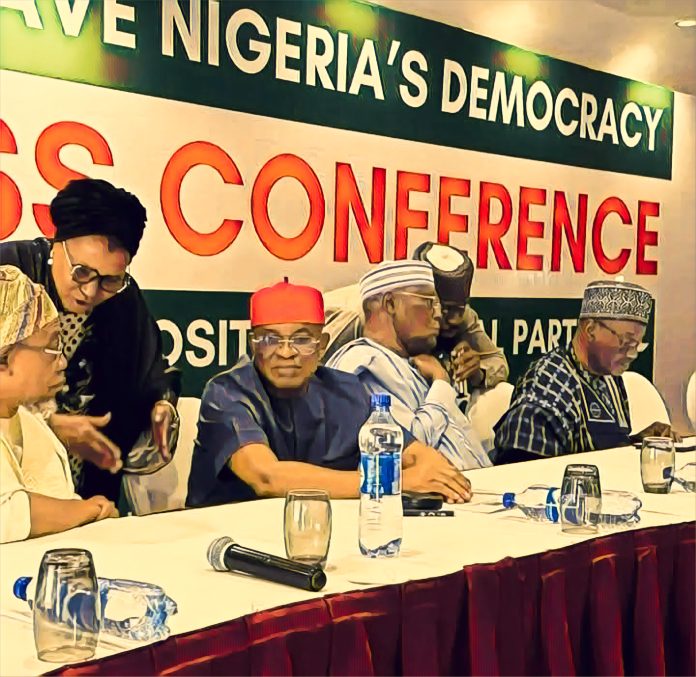
Leading opposition voices, including former Vice-President Atiku Abubakar and 2023 presidential candidate of the Labour Party, Peter Obi, have assembled at the Transcorp Hilton to present a unified stance on issues surrounding Nigeria’s electoral framework.
They are joined by prominent political stakeholders such as former Senate President David Mark, Buba Galadima of the New Nigeria Peoples Party, former Rivers State Governor Rotimi Amaechi, and National Secretary of the African Democratic Congress, Rauf Aregbesola.
The meeting, holding at the Lagos/Osun Hall of the hotel, is expected to culminate in a press briefing where the leaders will address journalists on contentious provisions within the Electoral Act 2022.
Discussions are also anticipated to extend to broader national issues affecting governance, democracy, and electoral transparency.
Additional Stakeholders in Attendance
Other political figures present include ADC National Publicity Secretary Bolaji Abdullahi, Senator Dino Melaye, former ADC National Chairman Ralph Nwosu, and former Cross River State Governor Liyel Imoke, among several party officials and political observers.
The Electoral Act 2022 allows political parties to choose candidates through three methods:
- Direct primaries involving all registered party members
- Indirect primaries conducted through delegates
- Consensus arrangements agreed upon by party leadership
These provisions have remained subjects of debate among political stakeholders, particularly concerning fairness, transparency, and internal party democracy.

