

KEY POINTS
- Nigeria’s balance of payments surplus fell 38 percent to $4.23 billion in 2025 from $6.83 billion in 2024.
- Foreign portfolio investment crashed 48 percent to $8.04 billion, while FDI surged 149 percent to $4.01 billion.
- Dangote Refinery contributed $6.13 billion in refined petroleum exports and cut fuel imports by nearly 29 percent.
Nigeria’s external sector posted a significantly weaker 2025, with the country’s overall balance of payments surplus falling 38 percent to $4.23 billion from $6.83 billion the previous year, according to provisional data from the Central Bank of Nigeria.
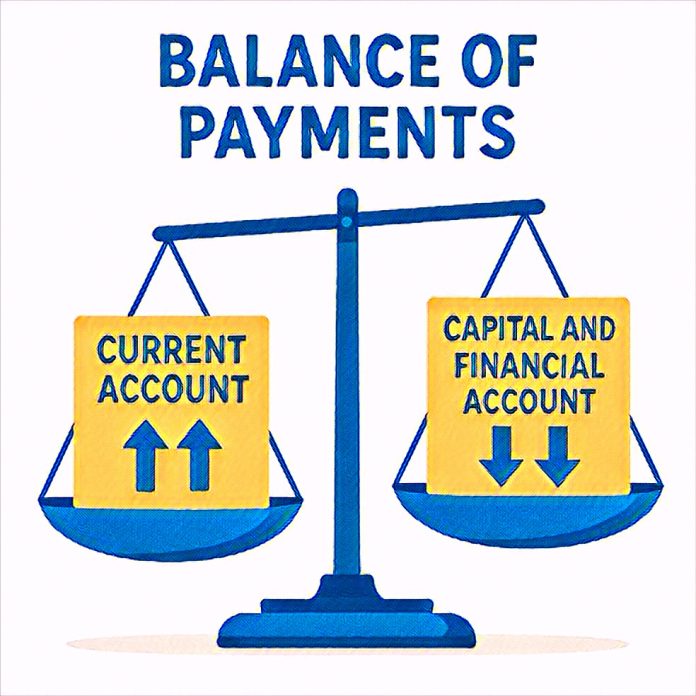
The Nigeria balance of payments 2025 report reveals a sector navigating contradictory forces: crude oil earnings slumped while gas and refined petroleum exports climbed, long-term foreign investors increased their commitments while portfolio investors pulled back sharply, and external reserves strengthened even as the current account surplus narrowed.
The current account, which tracks Nigeria’s net trade in goods and services, stayed in positive territory but contracted by 26 percent to $14.04 billion from $19.03 billion in 2024. Crude oil exports drove most of the damage, falling 14.4 percent to $31.54 billion from $36.85 billion. The CBN also noted that Dangote Refinery imported $3.74 billion in crude oil for domestic processing, adding further pressure on the goods account.
Dangote refinery and gas exports offer partial offset
The Nigeria balance of payments 2025 picture was not uniformly grim on the trade side. Gas exports surged 21.4 percent to $10.51 billion, offering some cushion against the crude oil shortfall. More significantly, the Dangote Refinery generated $6.13 billion in refined petroleum exports during the year while helping cut Nigeria’s fuel import bill by nearly 29 percent, from $14.06 billion to $10.00 billion. The goods account surplus reached $14.51 billion as a result.
Non-oil imports also rose 13.6 percent to $29.24 billion, adding to the current account pressure, while the deficit in the services account widened to $14.58 billion on higher spending on transport, travel, and insurance. Net out-payments in the primary income account jumped 60.9 percent to $9.09 billion, driven by dividends and interest payments flowing to non-resident investors.
FPI retreat offsets FDI surge in financial account
The financial account told the most dramatic story in the Nigeria balance of payments 2025 data. Foreign portfolio investment collapsed 48.3 percent to $8.04 billion from $15.55 billion in 2024, pushing the financial account from a net lending position of $9.65 billion to a net borrowing position of $1.69 billion. Foreign direct investment moved in the opposite direction, jumping 149 percent to $4.01 billion from $1.61 billion, suggesting that long-term investors retained confidence in Nigeria’s structural reforms even as short-term capital retreated.
Despite the narrowing surplus, Nigeria’s external reserves grew 13.8 percent and ended 2025 at $45.75 billion, a buffer the CBN has since built further, with reserves crossing $50 billion by February 2026.

