

KEY POINTS
- South Africa has formally signalled intent to source fuel from Dangote Refinery amid Middle East supply disruptions.
- Dangote says availability, not pricing, now drives procurement decisions across the continent.
- The refinery’s 650,000 barrel-per-day capacity positions it as Africa’s alternative to Persian Gulf supply.
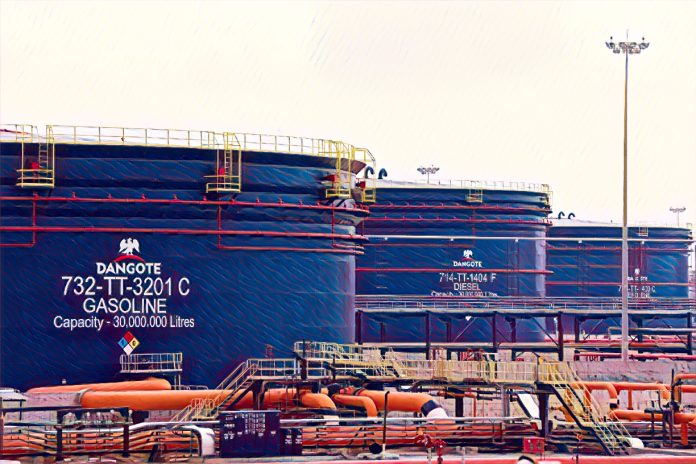
The Middle East conflict has handed Dangote Petroleum Refinery and Petrochemicals an unexpected new role: fuel lifeline for a continent scrambling to keep its economies running as traditional supply routes from the Persian Gulf grow increasingly unreliable.
Bloomberg reported Friday that several African governments, most notably South Africa, have launched aggressive outreach to the 650,000-barrel-per-day Lekki facility as the US-Israel war on Iran upends the global oil market. While the Dangote refinery Africa fuel supply inquiry surge reflects a fundamental shift in how sovereign energy buyers now approach procurement, one that Aliko Dangote himself has put plainly.
“Right now, it is not about pricing; it’s about availability. I think the situation will continue for a while,” Dangote said in a recent interview with The Economist.
South Africa leads the outreach
South Africa, one of the continent’s heaviest energy consumers, has moved beyond informal interest to formal coordination. A government spokesperson told Bloomberg that authorities are actively working with industry stakeholders to secure both crude oil and refined petroleum products from a diversified supplier base, with West Africa now firmly in the frame.
“A comprehensive plan is in place to manage potential supply risks,” the spokesperson added, signalling the seriousness with which Pretoria is treating its Persian Gulf exposure.
Beyond South Africa, the Bloomberg report described other African nations as also scrambling to lock in contracts that insulate their local markets from the volatility spreading out of the Strait of Hormuz corridor.
A turning point for Africa’s energy geography
The Dangote refinery Africa fuel supply dynamic marks a structural shift for the continent. Africa has historically depended on refined products imported from Europe, Asia, and the Middle East, a dependency that reflected the absence of large-scale domestic refining capacity. The $21 billion Lekki plant changes that calculation.
Since beginning operations, the refinery has already eliminated the recurrent fuel shortages that previously characterised Nigeria’s downstream sector, keeping petrol, diesel, and aviation fuel flowing consistently through a market that spent years rationing supply. That track record now positions it as a credible regional alternative for governments that can no longer afford to bet on supply stability from conflict-affected corridors.
The shift further carry a tension. Pump prices across Nigeria have climbed sharply as the refinery, which sources crude on international benchmarks, passes global price increases through to consumers. Dangote finally acknowledged in March that the facility cannot insulate its pricing from external market forces, even as it insulates the continent from supply disruption.

