

KEY POINTS
- Lagos resumes monthly environmental sanitation on April 25, running every last Saturday of the month.
- The exercise runs from 6:30 a.m. to 8:30 a.m. and covers cleaning, drainage, and waste disposal.
- Commissioner Wahab says compliance will be enforced by the full authority of the Lagos State Government.
Lagos State will resume its monthly environmental sanitation exercise on April 25, 2026, reviving a civic clean-up tradition that requires residents to sweep streets, clear drainage channels, and properly dispose of waste across the city every last Saturday of the month.
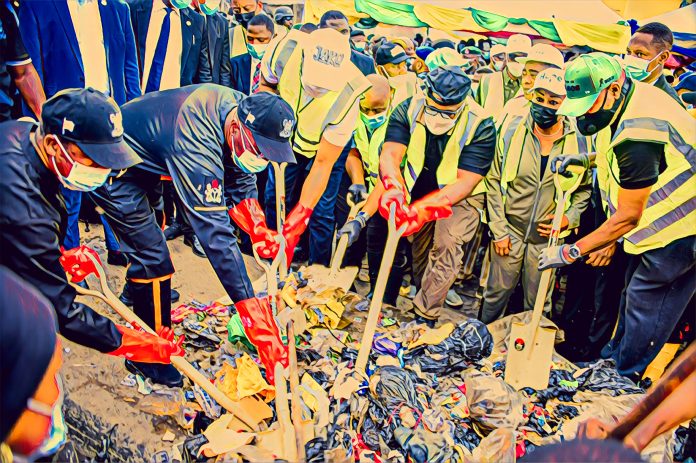
Commissioner for the Environment and Water Resources Tokunbo Wahab made the announcement following a symbolic relaunch of the Lagos sanitation exercise April programme at Idi-Oro in Mushin Local Government Area. The exercise will run from 6:30 a.m. to 8:30 a.m. each time, giving residents a two-hour window to complete their assigned clean-up duties before the rest of the day proceeds normally.
Shared responsibility, enforced compliance
Wahab framed the exercise as a collective civic obligation rather than an optional participation drive. Consequently, he was direct about enforcement, warning that the full authority of the Lagos State Government would back compliance measures against those who disregard the exercise. Beyond simply tidying streets, the Lagos sanitation exercise April focus will extend to drainage channels, a priority the state has increasingly linked to its broader flood prevention agenda as the rainy season approaches.
“The exercise is a shared responsibility crucial for promoting a cleaner, healthier, and flood-resilient Lagos,” Wahab said, urging residents to approach the monthly programme as a personal and community investment rather than a government imposition.
The Mushin relaunch serves as the state government’s public signal that the programme is back in full force, and officials used the occasion to reinforce the message that Lagos’s liveability and flood resilience depend partly on how consistently residents maintain their immediate environments between the bigger interventions the government funds on infrastructure and drainage.

