

KEY POINTS
- Residents of Yenagoa are protesting worsening environmental conditions caused by heaps of uncollected refuse across parts of the city.
- Overflowing waste dump sites and blocked drainage systems have raised fears of disease outbreaks, flooding, and economic losses.
- Sources linked the sanitation crisis to operational disputes involving the Bayelsa State Environmental Sanitation Authority and a refuse evacuation contractor.
Residents of Yenagoa have raised serious concerns over the increasing heaps of uncollected refuse littering parts of the state capital, warning that the worsening environmental conditions now pose major health and economic risks.
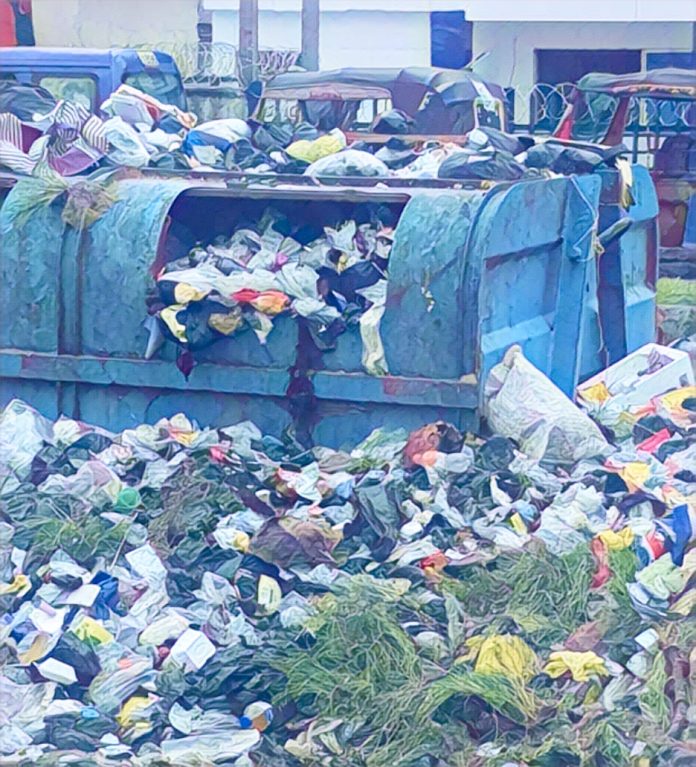
Several areas, particularly along the busy Azikoro Road axis, have reportedly been overwhelmed by overflowing waste dump sites emitting strong and offensive odours that residents describe as unbearable.
Business owners, commuters, and residents say the persistent stench has made daily life increasingly difficult, with many fearing possible outbreaks of diseases and environmental disasters if urgent intervention is not carried out.
Residents and traders operating close to the affected dump sites say the situation has deteriorated significantly in recent weeks.
Commercial tricycle operators and passengers were reportedly seen covering their noses while passing through the area due to the intense smell from decomposing refuse.
Some shop owners also disclosed that businesses are beginning to relocate from the affected areas as customers continue to complain about the unhealthy environment.
A trader identified as Mr Tari Preye lamented the impact of the poor sanitation conditions on commercial activities, stating that sales have dropped drastically because customers no longer feel comfortable visiting the area.
According to him, many business owners fear the area could gradually become deserted if the refuse crisis is not addressed quickly.
Residents Fear Disease Outbreak and Flooding
The growing waste problem has also affected drainage systems around the affected communities, with refuse reportedly spilling into gutters and waterways.
Residents say blocked drainage channels could worsen flooding during heavy rainfall while also increasing the risk of diseases linked to poor sanitation.
One resident, Mr Ebiowei Akimi, described the situation as a serious public health hazard, noting that many people living around the dump sites now constantly experience coughing and sneezing due to the polluted environment.
Another resident, Mrs Patience Ogbomo, expressed disappointment over the decline in sanitation standards in the Bayelsa capital.
She said residents previously enjoyed cleaner surroundings but now struggle with refuse scattered across several parts of the city, adding that children are among the worst affected by the unhealthy conditions.
Findings suggest that the worsening sanitation crisis may be connected to operational challenges within the Bayelsa State Environmental Sanitation Authority, popularly known as BESA.
The agency was established by Governor Douye Diri to implement a modern waste management and recycling system across the state.
Sources familiar with the development alleged that a disagreement currently exists between the Authority and a private company contracted to handle refuse evacuation in parts of the state.
According to an official of the company who spoke anonymously, the dispute centres on issues relating to payments and operational coverage, which have reportedly disrupted refuse collection efforts.
The source claimed the disagreement has negatively affected the broader environmental sanitation goals of the Bayelsa State Government.

