

Key points
- Abia has begun moving transport operators to the Nnenna Otti Bus Terminal in Umuahia.
- The phased rollout starts with Abia Green Shuttle buses, then informal and formal operators.
- The government says the terminal uses first-come, first-served loading regardless of union affiliation.
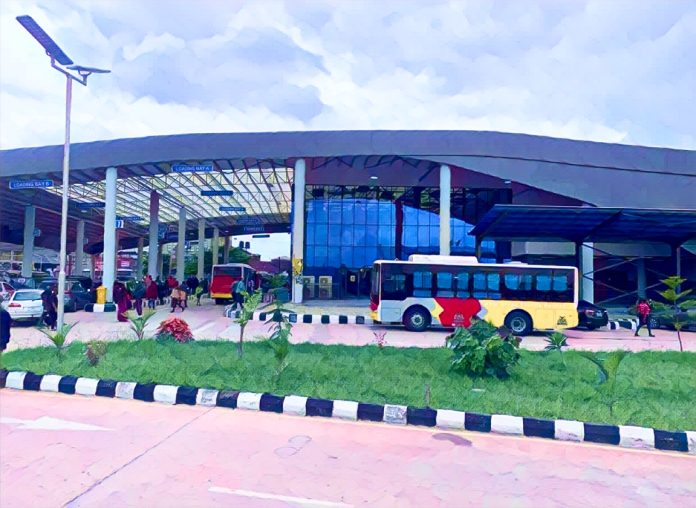
The Abia State Government has begun enforcing its new centralized transport system in Umuahia, with the phased relocation of transport operators to the Nnenna Otti Bus Terminal. The Commissioner for Information, Okey Kanu, announced the move at Government House, Umuahia, on Tuesday, while briefing reporters after the State Executive Council meeting that Governor Alex Otti chaired.
A phased rollout begins
According to Kanu, the government held a series of meetings with transport stakeholders to address their concerns and secure compliance. Consequently, full operations have started at the terminal, and informal operators and unions have already moved in, despite the resistance that often accompanies change.
“There appears to be some push backs among some of the operators, and this is as a result of the fact that people are not easily giving in to change,” he said. Furthermore, Kanu explained that the rollout follows three stages. The first phase covers the Abia Green Shuttle buses, the second phase brings in informal transport operators, and the third phase will absorb the formal operators.
A more organized system
Answering questions, the Commissioner for Transport, Dr. Chimezie Ukaegbu, insisted the government had not taken away anyone’s livelihood but had instead introduced a more organized system to sanitize and improve the sector. Moreover, he said unions and operators were asked to bring four workers each to the terminal, where staff would identify them with reflective tags.
In addition, Ukaegbu said the terminal allocates loading opportunities on a first-come, first-served basis, regardless of union affiliation. He estimated that about 80 to 90 percent of operators had embraced the initiative, while engagements continue with those yet to comply. He also pointed to comfort upgrades, noting that the government provided an air-conditioned drivers’ lodge and a conducive waiting environment for passengers.
Similarly, the Special Adviser to the Governor on Media and Publicity, Ferdinand Ekeoma, said centralization would reduce urban congestion, indiscriminate loading bays and the security risks tied to unregulated operators. According to him, the reform would also cut the costs operators bear and curb extortion. “We have seen transport operators extort people; by coming up with this organised system, we are solving our problems,” he said. Ultimately, the government framed the terminal as a tool to modernize transport, lift operator earnings and improve the daily commute across Umuahia.

