

KEY POINTS
- Tinubu says Nigeria’s inactive refineries will resume operations, stressing that they must be profitable and deliver real economic value.
- NUPENG asks the president to end casualisation in the upstream oil and gas sector and supports further rehabilitation of petroleum infrastructure.
- Tinubu urges faster delivery of CNG benefits, while highlighting salary payments and major infrastructure projects as part of his administration’s economic efforts.
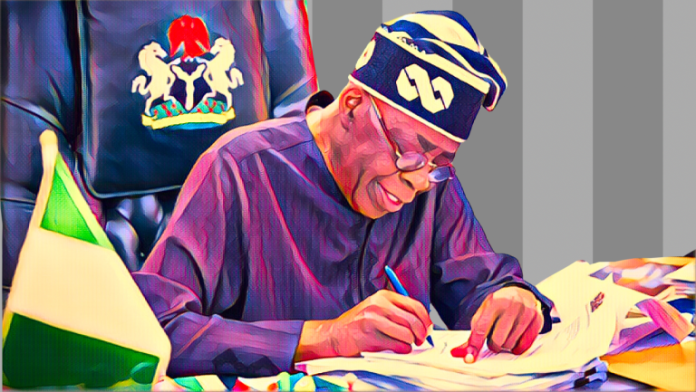
President Bola Ahmed Tinubu has assured workers in Nigeria’s petroleum industry that the country’s long-inactive refineries will eventually return to full operations, saying his administration is committed to restoring the facilities and ensuring they deliver meaningful economic value.
Tinubu gave the assurance on Thursday at the Presidential Villa in Abuja when he received the leadership of the Nigeria Union of Petroleum and Natural Gas Worker, NUPENG.
The president’s statement comes amid continued concerns over the condition and performance of Nigeria’s state-owned refineries, which have struggled with prolonged shutdowns, rehabilitation challenges and operational difficulties over the years.
Responding to concerns raised by NUPENG, Tinubu said the government was determined to bring the facilities back into productive use.
“The refineries that you mentioned are going to come back to work,” the president said.
However, Tinubu stressed that simply seeing flames or smoke from a refinery should not be taken as evidence that the facility is operating successfully.
According to him, the ultimate objective should be to ensure that the refineries operate efficiently, remain financially viable and provide the economic benefits for which they were originally established.
Tinubu accepts responsibility for inherited assets
The president also said he had accepted responsibility for addressing the challenges surrounding assets and liabilities inherited from previous administrations.
He said his administration would not continue to dwell on what went wrong in the past but would instead focus on fixing existing problems and ensuring that national assets work for the benefit of Nigerians.
Tinubu maintained that the responsibility of governing the country included dealing with inherited difficulties and finding lasting solutions to them.
He said he was committed to making Nigeria’s assets productive and ensuring that they generated the greatest possible value for the population.
Tinubu also defended the economic policies of his administration, arguing that the regular payment of workers’ salaries had helped to sustain economic activity across the country.
He said federal, state and local government employees had continued to receive their salaries, which, in turn, enabled workers to support their families and spend money on goods and services.
According to him, the flow of salaries through the economy also benefits businesses and other sectors by supporting consumer spending.
The president also urged NUPENG to help ensure that the benefits of Compressed Natural Gas (CNG) reach ordinary commuters more rapidly.
Tinubu acknowledged that the gains from the government’s CNG initiative had not spread as quickly as he had expected.
He therefore called for greater efforts to ensure that the transition towards gas-powered transportation translates into tangible relief for commuters and contributes to lower transportation costs.

