

KEY POINTS
- Four years after the attacks, several Eha-Amufu farm settlements remain largely deserted.
- Residents allege that cattle invasions continue to destroy farms and discourage permanent return.
- Communities are seeking stronger security, reconstruction, improved roads and compensation for affected farmers.
Four years after deadly attacks forced residents to flee several farming settlements in Eha-Amufu, Isi-Uzo Local Government Area of Enugu State, many of the affected communities remain largely deserted, with residents saying continued cattle invasions and insecurity have made permanent return difficult.
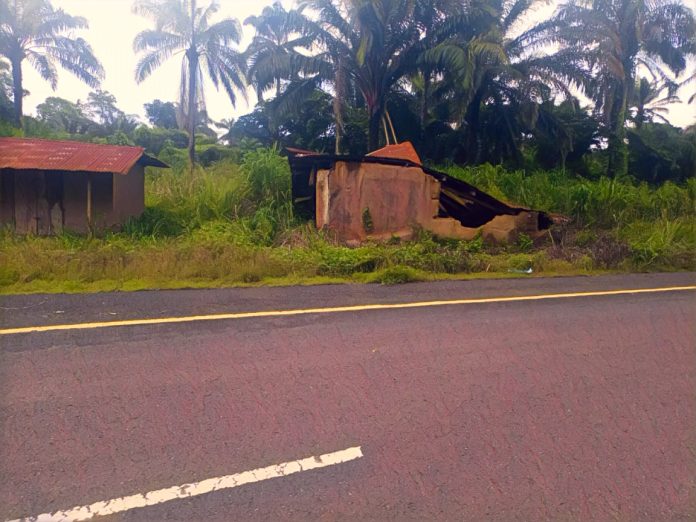
An investigative visit to the area found abandoned houses, damaged religious buildings, overgrown compounds and a market that has remained shut since the violence. Although a newly constructed 21-kilometre road and the deployment of a joint security team have improved access and provided some reassurance, residents say significant challenges remain.
The affected communities include Orie Ogbete Mgbuji, Ukwuekwu-Mgbuji, Ekpufu-Mgbuji, Onungbede and Amuogbu-Ebo, among other agricultural settlements.
An investigative team travelled by commercial motorcycle into the rural communities on August 19, covering several settlements that residents said were once vibrant centres of farming and trade.
Along the 21-kilometre asphalt road constructed by the administration of Enugu State Governor Peter Mbah, the communities appeared largely deserted. Several buildings have been left to deteriorate, while vegetation has taken over residential compounds. In some locations, only a handful of people were seen.
At Ukwuekwu-Mgbuji and Ekpufu-Mgbuji, only four people were encountered around the village squares during the visit, underscoring the extent to which the attacks disrupted life in the area.
At Ogbete Mgbuji, once a major trading centre where residents from Enugu and neighbouring Benue State reportedly conducted business, the market has remained inactive since the attacks.
The abandoned Anglican Church Parish in the community has also been converted into an operational base for a joint security team comprising soldiers, police officers, Nigerian Security and Civil Defence Corps personnel, state Forest Guards and local vigilantes. Despite the presence of security personnel, residents and some security operatives said cattle continue to enter cultivated farmlands, particularly at night.
A senior security operative, who spoke on condition of anonymity, said one recent incident involved cattle destroying more than five hectares of rice cultivated collectively by returning residents.
The operative said the farmers had invested considerable labour and money in the rice project before the crops were destroyed overnight.
Residents said responses to such incidents have often involved contacting local Fulani leaders to remove the cattle rather than imposing sanctions or ensuring compensation for farmers.
This, they argued, leaves farmers carrying the financial consequences of repeated crop destruction.
For residents displaced from the settlements, the continued insecurity remains one of the biggest obstacles to returning home.
Nkechi Onunze, an indigene of Onungbede-Mgbuji, said her family home was among those destroyed during the attacks.
She said she had returned to the settlement only to harvest crops because her family was struggling to survive, rather than to rebuild or permanently relocate.
According to her, no government agency had provided assistance to rebuild the destroyed houses.
Onunze said her family was currently staying with her father-in-law after their home was burnt.
She also expressed concern about the continued presence of herders in the area, alleging that cattle frequently enter farms at night and destroy crops.
She appealed to the government and security agencies to address the situation so that displaced residents could safely return.
Onunze said the cost of travelling from where her family currently stays to the abandoned settlement had also become a burden, particularly when they need to visit their farms. Sunday Ajah, a survivor from Ekpufu-Mgbuji, recalled the attack that forced him and many other residents to flee.
Ajah said he encountered the attackers after they blocked a road and began killing people. He said his motorcycle was taken and burnt, while he escaped into the bush and narrowly survived.
He said the violence scattered families, forcing many residents to seek refuge in churches, schools and relatives’ homes.
According to Ajah, many residents have since been unable to return permanently.
He alleged that armed attackers included Fulani herders and individuals from neighbouring communities in Benue State, while also saying cattle continue to enter farms in the area.
Ajah appealed for improved security and better access roads to enable residents to return and resume farming.
The impact of the violence is also evident in Ogbete, where a once-busy market has remained closed since the attacks.
Ajah said the market was attacked on January 7, 2022, with traders and other residents fleeing after the violence.
He recalled that the market previously attracted traders from both Enugu and Benue states but became inactive after the attack.
With many residents still displaced, the surrounding community has struggled to regain its former economic activity.
Ajah said he wanted to return permanently but believed government intervention was necessary, particularly the improvement of access roads and security.
Ebo settlements yet to recover
Ogbu Gabriel, from Amuogbu-Ebo, said several settlements in the Ebo area remained largely empty.
He listed Amuobelebe, Amuokpobe, Amuogbaga and Amuogbu among communities where, according to him, displaced residents had not returned to their homes.
Gabriel said some displaced residents had moved to cities, while others were living with relatives and surviving through menial jobs, construction work and casual labour.
He also disputed claims that residents had fully returned to the affected communities, urging government officials to visit the settlements and assess the situation themselves.
According to him, houses, schools and churches destroyed during the violence had not been rebuilt.
He further alleged that some residents who returned to cultivate their farms were later found dead or remained missing.
At Ukwuekwu-Mgbuji, Sunday Ogbuabor said a small number of residents had returned but continued to live under considerable fear.
Ogbuabor alleged that cattle frequently enter farms and destroy crops, citing a recent incident in which more than 50 cattle reportedly entered cultivated farmland.
He said residents who had returned were still afraid to sleep peacefully at night.
Ogbuabor also said many houses had been damaged during the period of abandonment, while others were reportedly vandalised or left without roofs.
He said he was living in another person’s house because his own home had been damaged.
The resident called for the reconstruction of destroyed houses and compensation for farmers whose crops had been destroyed.
He also advocated the use of drone surveillance to monitor the area and identify criminal activity in real time.
Residents acknowledged that the presence of the joint security taskforce has provided some measure of reassurance.
Ogbuabor said security personnel recently intervened after cattle entered farms, with the taskforce leader contacting the owner and having the animals removed within about 30 minutes.
However, he said such interventions did not address the broader problem of repeated cattle incursions and the absence of compensation for damaged farms.
Residents therefore want security agencies to move beyond temporary mediation and develop stronger measures to prevent recurring incidents.
The people of Eha-Amufu say they want to return to their ancestral communities, but insist that security must come first.
They are calling for stronger surveillance, protection of farms, reconstruction of homes and public buildings, improved access roads and measures to prevent further destruction of crops.
They also want farmers affected by cattle invasions to receive compensation for losses.
The 21-kilometre road constructed by the state government has improved access to the communities and was intended to facilitate security patrols, but residents say infrastructure alone cannot revive settlements that remain unsafe.
For many displaced families, the abandoned communities represent more than damaged buildings. They are their ancestral homes, farms and former sources of livelihood.
Four years after the attacks, residents continue to make occasional trips into the settlements to harvest crops while living elsewhere.
Their return, they say, will depend largely on whether the government and security agencies can provide lasting protection and create conditions that allow them to rebuild their homes and livelihoods.

