

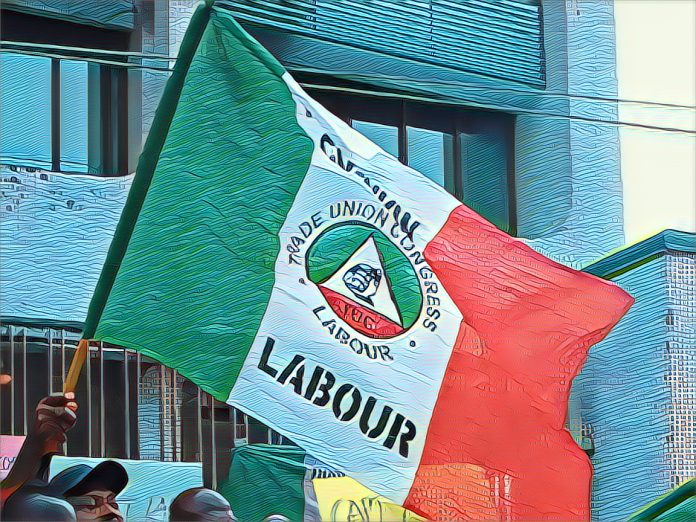
Tensions are escalating between Nigeria’s Federal Government and organized labor unions, setting the stage for a possible extended national strike.
The Nigeria Labour Congress (NLC) and its partner, the Trade Union Congress (TUC), are at the end of their patience. Their respective ultimatums—21 days for the NLC and two weeks for the TUC—expired last week without a satisfactory resolution from the government.
Rather than taking decisive action, the Federal Government has adopted a divide-and-rule strategy, holding separate meetings with the two labor unions. Labor Minister Simon Lalong’s request for an additional two-week extension from the TUC has only fueled the crisis.
Amid soaring inflation rates, labor groups are demanding significant wage hikes and expressing outrage over the government’s removal of fuel subsidies, leading to skyrocketing fuel prices.
President Bola Tinubu’s decision to lift the fuel subsidy on his first day in office appears misguided. The move came without prior consultations with labor unions or plans to mitigate the resulting economic hardship, which has reverberated nationwide.
Despite Brent Crude selling at $95.24 per barrel internationally, fuel prices in Nigeria continue to rise. Recent reports also suggest that the Federal Government spent a covert N169.4 billion on fuel subsidy in August to maintain a price of N620 per liter.
As The Premium Times reported, labor unions have specific demands, including a 200-300% wage increase and effective use of N5 billion worth of palliatives to offset the effects of subsidy removal. They also call for tax exemptions for specific worker categories and the fast-tracking of Compressed Natural Gas (CNG) as a cheaper alternative to petrol.
NLC leader Joe Ajaero and TUC counterpart Festus Osifo are clearly exasperated. “There was no agreement on any issue; there is no CNG anywhere, and refineries are not working,” lamented Ajaero.
According to a report by Premium Times, Osifo echoed this sentiment, refusing to grant the government’s request for an additional two-week extension.
The stalemate is alarming, considering the wider socio-economic context. The value of the naira has been eroding, hitting over N1,000 to $1 last week. The National Bureau of Statistics reported a 25.8% inflation rate in August, adding more urgency to the labor demands.
The government must abandon its divide-and-rule tactics and earnestly address the labor unions’ demands. Failure to do so could weaken an already struggling economy and risk social unrest. President Tinubu, who once said, “Don’t pity me. I will live up to expectations,” must now deliver on that promise.
The way forward lies in transparency, decisive action, and re-evaluating strategies like recovering public funds in private pockets and implementing the Steve Oronsanye report on the merger of Ministries, Departments, and Agencies (MDAs).

