

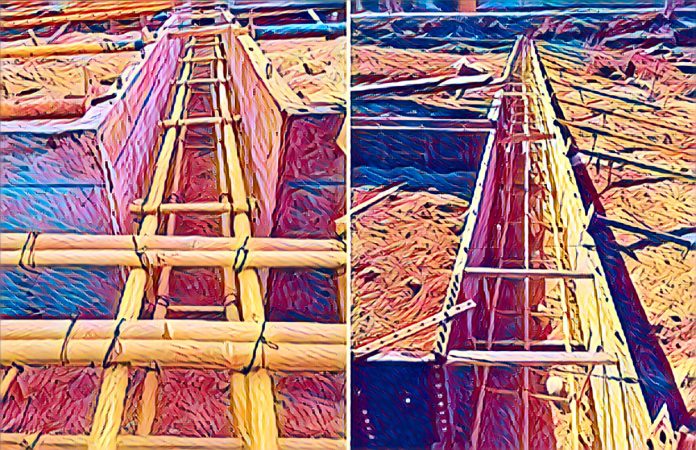
In the face of Nigeria’s daunting economic challenges, marked by a significant surge in the cost of construction materials, ingenious alternatives have emerged in the construction industry. One such innovative solution gaining traction is the use of bamboo in place of traditional iron rods for building construction, a testament to the resilience and adaptability of Nigerians.
The skyrocketing prices of building materials, particularly iron rods, have left many construction projects in limbo, with homeowners and developers grappling with escalating costs. The situation has led to abandoned constructions, with some property owners opting to sell off uncompleted buildings in hopes of recouping their investments. However, amidst these challenges, a creative workaround has surfaced—bamboo, a material traditionally used for scaffolding, is now being repurposed as a structural component in building construction.
Economy&Lifestyle delved into this trend, uncovering that construction engineers are increasingly turning to bamboo, reinforced with construction wires, for casting pillars and decking in buildings. This method not only offers a cost-effective alternative but also leverages the natural strength and flexibility of bamboo. Andrew Asaga, a seasoned building engineer, highlighted that while iron rods are the standard for ensuring structural integrity, bamboo has emerged as a viable substitute, capable of providing necessary support to an extent.
The cost advantage of bamboo over iron rods is undeniable, with prices of iron rods having doubled within a year. The financial implications are profound, with a ton of 12mm iron rods, consisting of 93 pieces, now priced over N1.3 million, placing a significant strain on developers and homeowners alike. This stark increase has compelled individuals like one of Asaga’s clients to explore a hybrid approach, combining bamboo with iron rods to construct building pillars, in a bid to mitigate costs.
The shift towards bamboo is not without its implications. The rising demand has consequently led to an increase in the price of bamboo itself, with a single piece now costing up to N1500, up from N400. This surge is attributed to logistics challenges and road levies, as noted by Mrs. Fatimetu Momoh, a bamboo seller. Despite the price hike, bamboo remains a considerably cheaper option compared to iron rods, albeit with potential concerns over the durability and safety of structures built with alternative materials.
The construction industry’s pivot to bamboo underscores a broader issue of affordability and accessibility of building materials in Nigeria. Engineers like Atanaza Godbless voice concerns over diminishing profits and the sustainability of construction businesses under the current economic conditions. The escalating costs have forced professionals to seek out less conventional materials, inadvertently raising questions about the long-term viability and safety of such practices.
The government’s role in addressing the soaring costs of construction materials is crucial. The lack of intervention has not only stifitted the construction sector’s growth but also heightened the risk of compromised building integrity, leading to an increase in building collapses. This situation calls for urgent regulatory and policy measures to stabilize prices and ensure the availability of standard building materials, thereby safeguarding the industry’s future and the safety of the populace.

