

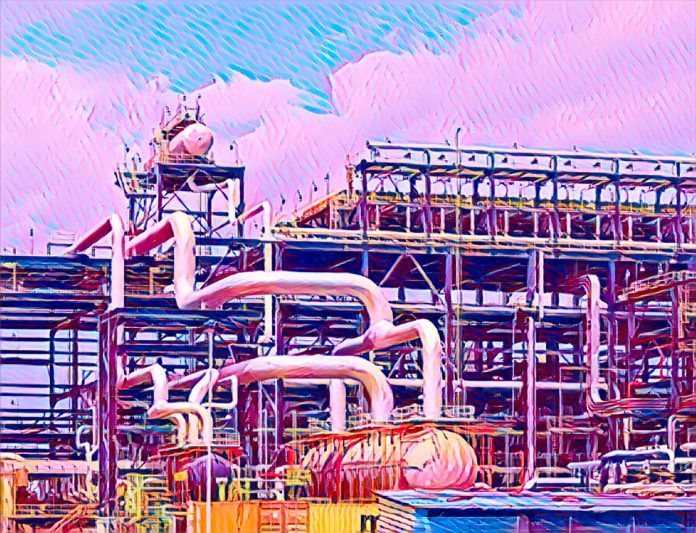
Nigeria’s largest single local investment, a multibillion-dollar refinery and petrochemical plant, is confronting several longstanding challenges that threaten its progress and potential impact on the nation’s economy. This ambitious project, spearheaded by Dangote Group, is seen as a game-changer for Nigeria’s industrial landscape, but it faces hurdles that could impede its success.
Located in the Lekki Free Trade Zone in Lagos, the Dangote Refinery and Petrochemical Plant is poised to be one of the world’s largest oil refineries and the biggest in Africa. With a refining capacity of 650,000 barrels per day, the facility aims to reduce Nigeria’s dependency on imported refined petroleum products and strengthen its position as a leading player in the global oil market.
Despite its promise, the project is grappling with significant challenges, including infrastructure deficits, regulatory hurdles, and security concerns. The lack of adequate infrastructure, such as roads, power supply, and water, poses a major obstacle. Transporting materials and equipment to the site has been fraught with delays and additional costs. “Infrastructure remains a critical issue. Efficient transportation and reliable power supply are essential for the seamless operation of such a massive project,” said an industry expert.
Regulatory and bureaucratic hurdles further complicate the project’s progress. Navigating Nigeria’s complex regulatory environment requires substantial time and resources. The need for various permits and approvals has led to delays, impacting the project’s timeline. “The regulatory landscape in Nigeria can be quite challenging. Streamlining processes and reducing bureaucratic red tape would greatly benefit such large-scale investments,” noted a business analyst.
Security concerns also loom large, with the project site being susceptible to vandalism, theft, and other forms of criminal activity. Ensuring the safety of personnel and assets is paramount to maintaining the project’s momentum. “Security is a major concern for any investment of this magnitude. Effective measures must be in place to protect the site and its workers,” emphasized a security consultant.
Despite these challenges, the Dangote Refinery and Petrochemical Plant holds immense potential for Nigeria’s economy. Once operational, it is expected to create thousands of jobs, stimulate economic growth, and significantly reduce the country’s import bill for petroleum products. Additionally, the plant’s petrochemical section will produce a range of products, including polypropylene and polyethylene, which are crucial for various industries.
The Nigerian government has expressed strong support for the project, recognizing its strategic importance. Efforts are underway to address some of the critical issues. For instance, plans to improve road infrastructure in the Lekki Free Trade Zone are being expedited, and initiatives to enhance power supply are in the pipeline. “The government is committed to supporting the Dangote project. We are working to remove obstacles and facilitate its timely completion,” stated a government spokesperson.
Local communities stand to benefit significantly from the investment through job creation and community development programs. Dangote Group has pledged to invest in social infrastructure, including schools, hospitals, and clean water projects, to uplift the surrounding communities. “This project has the potential to transform lives and contribute to sustainable development in the region,” said a company representative.
Despite the current challenges, there is optimism about the project’s future. The resilience and commitment of Dangote Group, coupled with government support and community engagement, are expected to drive the project towards successful completion. “While the road ahead is not without obstacles, the potential rewards make it a journey worth pursuing,” remarked a senior official involved with the project.
In conclusion, Nigeria’s largest single local investment, the Dangote Refinery and Petrochemical Plant, faces significant challenges that threaten its progress. However, with strategic measures to address infrastructure, regulatory, and security issues, the project holds the promise of transforming Nigeria’s industrial landscape and boosting its economy. The combined efforts of the government, Dangote Group, and local communities offer a beacon of hope for the successful realization of this ambitious endeavor.
Source: BusinessDay

