

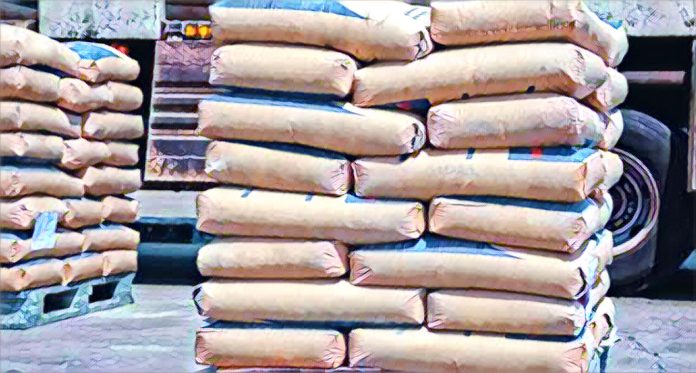
Many Nigerians are finding it harder than ever to afford cement, a key material for building homes and infrastructure. The dream of seeing lower cement prices is fading fast as the cost to produce cement has skyrocketed by 121%. This increase is mainly due to the falling value of the naira and high inflation rates.
Several factors are behind the high cement prices in Nigeria. One major issue is the smuggling of cement to neighboring countries like Chad and Cameroon, where prices are much higher. For example, in these countries, a 50kg bag of cement sells for between $120 and $150. When converted using the current exchange rate of N1,600 per dollar, this is much more than the local Nigerian price of around N8,000 per bag. This price difference encourages smugglers to take cement out of Nigeria, reducing the local supply and keeping prices high.
Kabiru Rabiu, the Group Executive Director of BUA Cement, explained that smuggling is a big problem because it’s profitable for traders to sell cement across the border where they can get a higher price. This reduces the amount of cement available for Nigerian customers, making it more expensive.
Nigeria’s leading cement companies—Dangote Cement, Lafarge Africa, and BUA Cement—have been affected by these rising costs. Although their combined revenue increased by 84.5% in the first quarter of 2024, the high cost of producing cement has cut into their profits. Production costs jumped from N264.9 billion in early 2023 to N586.6 billion in 2024, leading to a 4.1% drop in profit before taxes.
The high price of cement is hitting consumers hard, especially builders and block makers. Many Nigerians are finding it difficult to afford cement, which now costs between N8,000 and N9,000 per bag. The National Association of Block Moulders of Nigeria (NABMON) has urged the government to lower import duties on cement production materials to attract more investment and potentially reduce prices.
Builders like Sikiru Ajala in Lagos express their frustration, noting that high cement prices, coupled with high interest rates on loans, make construction projects less feasible. Ajala highlighted that with interest rates between 30% and 35%, building costs become unmanageable.
Cement manufacturers face numerous challenges that contribute to the high prices. For instance, the cost of importing machinery and parts for maintenance has risen sharply due to the unstable exchange rate. Energy costs, which make up 40-50% of production costs, have also increased significantly. Although energy is paid for in naira, its price is tied to the US dollar, causing costs to rise as the naira weakens.
Additionally, essential materials like gypsum and the polypropylene bags used to package cement are imported and priced in dollars. Kabiru Rabiu of BUA Cement pointed out that while some materials, such as local gypsum, are sourced within Nigeria, many vital components depend on the dollar, driving up overall production costs as the naira loses value.
To address these challenges, Dangote Cement plans to transition its fleet of cement trucks to Compressed Natural Gas (CNG) by 2025, aiming to cut down on high fuel costs. The company is also building a new plant in Ogun State, which is expected to produce 6 million metric tonnes of cement annually. This increase in supply might help stabilize prices over time.
For now, however, Nigerians must cope with high cement prices and hope that these efforts will lead to more affordable construction materials in the future.

