

KEY POINTS
- Senators argue over proposed 15% state allocations.
- Legal challenges are expected due to the funding model.
- Senate approves all related zonal commission bills.
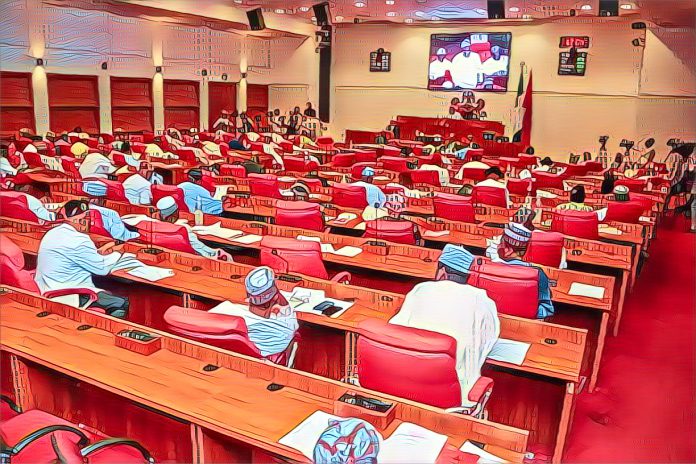
On Thursday, senators disagreed on the source of funding for the newly established zonal development commissions.
Senators divided over commission funding sources
The debate took place as the Senate and House of Representatives advanced legislation to create the commissions, removing operational immunity for their boards and officers.
The dispute arose during a review of the South-South Development Commission Establishment Bill, 2024, which serves as a model for other zonal commissions. At the centre of the debate was a recommendation by the Senate Committee on Special Duties that 15% of member states’ statutory allocations fund the commissions.
According to Punch, several senators, including Wasiu Eshinlokun (APC-Lagos East), Seriake Dickson (PDP-Bayelsa West), and Yahaya Abdullahi (PDP-Kebbi North), opposed the funding model. Abdullahi warned that no state would willingly allow its statutory allocation to be reduced, which could lead to legal challenges.
“Some state governments would litigate against the 15% of statutory allocations recommended for funding their zonal development commissions,” Abdullahi said.
Deputy Senate President Barau Jibrin clarified that the 15% allocation would not be directly deducted from states’ funds. Instead, it would be calculated by the federal government and drawn from the Consolidated Revenue Fund.
Senate passes zonal commission bills swiftly
Despite the clarification, some senators remained unconvinced. Senate President Godswill Akpabio stepped in, asserting the provision’s constitutionality under Section 162(4) of the 1999 Constitution, which grants the National Assembly authority over appropriations from the Federation Account or Consolidated Revenue Fund.
“Anyone who wants to contest that in court is free to do so,” Akpabio said before calling for a voice vote, in which the majority supported the provision.
Akpabio later praised the senators for passing the consolidated bills, which include the South-South Development Commission Establishment Bill, 2024, the North West Development Commission Act (Amendment) Bill, 2024, and the South-East Development Commission Act (Amendment) Bill, 2024. Other related bills had been previously passed.

