

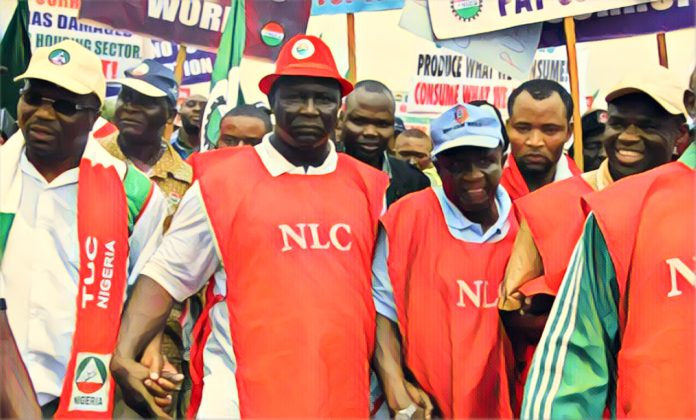
The Nigeria Labour Congress (NLC) has declared its intention to organize a two-day nationwide protest on February 27 and 28, 2024, aiming to draw attention to the escalating economic hardship and insecurity plaguing the nation. This announcement was made by the NLC’s National President, Joe Ajaero, during a press briefing in Abuja, highlighting the labor union’s growing concerns over the state of the nation’s economy and the security challenges affecting its citizens.
The planned protest is set to commence a week following the expiry of a 14-day ultimatum issued to the Federal Government, which is due to end on February 23. This ultimatum, presented jointly with the Trade Union Congress (TUC) on February 8, called on the government to address a series of demands. These include wage increments and improved access to public utilities, amidst accusations that the government has not fulfilled its promises to mitigate the effects of various reforms on the populace.
Ajaero emphasized the importance of the government not disregarding the deadline set by the ultimatum, reflecting the urgency and seriousness with which the labor unions view the current economic and security situation in Nigeria. He pointed out that millions of Nigerian workers are currently grappling with hunger, diminished purchasing power, and heightened insecurity. These issues have been significantly exacerbated by recent government reforms, which, according to the NLC, have contributed to the spiraling inflation rates.
The economic strain on Nigerian workers has been particularly intensified following President Bola Tinubu’s decision last May to eliminate a widely utilized but expensive fuel subsidy. Furthermore, the administration’s move to lift restrictions on currency trading led to a more than threefold increase in petrol prices, adding to the financial burden faced by the general populace.
The NLC’s decision to proceed with the nationwide protest underscores a critical moment in Nigeria’s ongoing struggle with economic challenges and the quest for stability and security. By mobilizing workers across the country, the labor unions aim to press the government into taking concrete actions to alleviate the hardships faced by millions of Nigerians.
As the countdown to the protest begins, all eyes are on the Federal Government’s response to the ultimatum and its readiness to engage with labor unions in addressing the pressing economic and security concerns.

