

KEY POINTS
- The House of Representatives has urged the CBN to suspend its planned increase in ATM charges.
- The CBN’s new policy, set to take effect in March 2025, introduces a ₦100 charge per ₦20,000 withdrawal for customers using other banks’ ATMs and an additional ₦500 surcharge for off-site ATMs.
- Public and legislative backlash has criticized the policy as exploitative, with calls for the CBN to engage stakeholders and reconsider the charges.
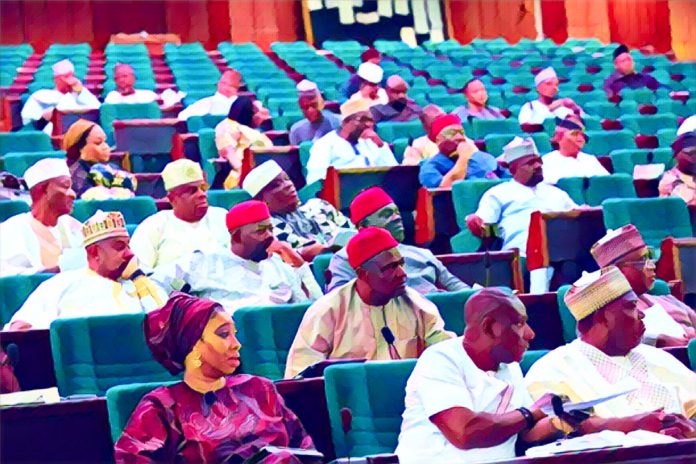
Following a motion of urgent public importance, the House of Representatives has passed a resolution urging the Central Bank of Nigeria (CBN) to suspend its planned increase in Automated Teller Machine, ATM, transaction charges and halt the discontinuation of free ATM withdrawals for customers using other banks’ ATMs.
The motion, moved by Hon. Marcus Onobun, highlighted the potential financial strain the new policy would impose on Nigerians, particularly low-income earners and small business owners who rely heavily on ATM services for daily transactions.
The CBN had announced in February 2025 that the three free monthly withdrawals allowed for customers using other banks’ ATMs would no longer apply, citing rising operational costs and the need to improve ATM efficiency
Channelstv reports that under the new policy, customers withdrawing from other banks’ ATMs would be charged ₦100 for every ₦20,000 transaction, while off-site ATMs would attract an additional surcharge of up to ₦500 per ₦20,000 withdrawal.
“The three free monthly withdrawals allowed for remote-on-us (other bank’s customers/not-on-us consumers) in Nigeria under Section 10.6.2 of the Guide shall no longer apply,” the CBN stated in its circular to financial institutions.
Lawmakers and public criticise policy as burdensome
The House of Representatives expressed concerns that the new charges would exacerbate the financial difficulties faced by Nigerians, especially in the wake of rising inflation and economic instability.
Lawmakers urged the CBN to suspend the policy until proper consultations are held with relevant stakeholders, including the House Committees on Banking, Finance, and Financial Institutions.
“This policy will impose additional financial burdens on Nigerians at a time when many are struggling to make ends meet,” Hon. Onobun remarked during the debate.
Public reactions to the policy have been overwhelmingly negative, with many Nigerians taking to social media to express their dissatisfaction.
Critics argue that the policy disproportionately affects low-income earners and could discourage the use of formal banking services, potentially driving more people towards informal financial systems. “This is another way to exploit the masses. How do they expect us to survive with all these charges?” one Twitter user lamented.

