

Key Points
-
The tragic loss of children to measles prompted the village to embrace vaccination.
-
A mother’s plea led to her children being immunised and staying healthy.
-
Collaboration between government, health workers, and local leaders is vital for success.
In the small village of Ungwan Kanawa in Kaduna, a heartbreaking tragedy has sparked a life-saving shift in attitudes toward vaccination.
After losing several children to measles due to resistance to vaccination, the villagers now recognise the importance of immunisation.
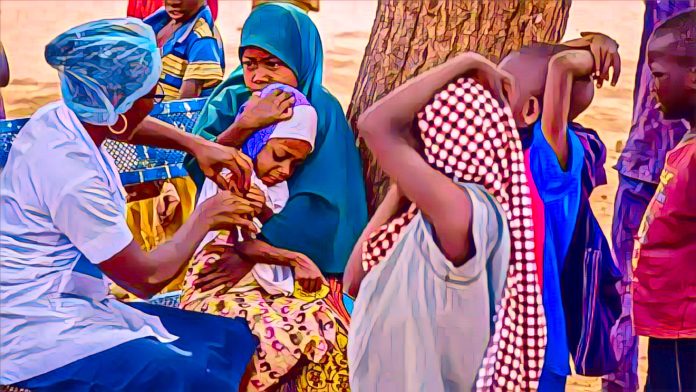
A medical outreach held by the Kaduna State Primary Health Care Board, in collaboration with UNICEF, was pivotal in this change, as the community witnessed the severe consequences of their earlier refusal.
A mother’s heartbreak sparks change in attitude
Saudatu Safiyanu, a mother from the village, lost four of her six children to measles and severe fever. She described how her husband had long opposed vaccination, despite the repeated visits from medical teams.
“One day, I spoke to one of the vaccinators, and after they spoke to my husband, he finally agreed,” Safiyanu said.
Since vaccinating her surviving children, they have remained healthy and free from serious illness.
Sadly, Safiyanu’s experience reflects the larger trend of parental refusal in the village. Many men resisted vaccinations, but the women were often more willing to vaccinate their children.
The tragic loss of children has now made the community realise the importance of immunisation, and they are increasingly cooperating with medical teams.
Government, community, and religious leaders work together
The Nigerian government, along with community, religious, and traditional leaders, has played a crucial role in raising awareness and encouraging vaccination.
Gerida Birukila, UNICEF’s Chief of Field Office in Kaduna, stressed the importance of vaccination and the challenges that remain.
She noted that the community’s refusal rate had been 100% just three years ago, but now, after constant education, they have begun to accept vaccination as a means of protecting their children.
Despite the progress, the community still faces significant challenges, including a shortage of vaccines and continued resistance from some parents.
Nonetheless, the concerted efforts of local leaders and health officials are essential in tackling the measles outbreak and preventing future deaths.

