

KEY POINTS
-
ASUU strikes stall Nigeria’s future and disrupt education progress.
-
Prolonged academic delays damage students’ mental and career stability.
-
Nigeria loses talent as youth flee unstable education systems.
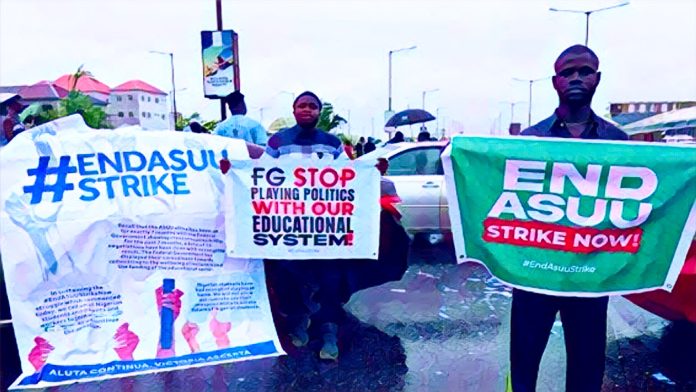
The future of a nation is contingent upon its youth, and education is the most powerful instrument to mold that future. In Nigeria, the persistent industrial actions by the Academic Staff Union of Universities (ASUU) have adversely affected the ambitions of millions of students, parents, and, by extension, the nation’s progress. These strikes, although frequently based on legitimate concerns over university finance, staff welfare, and autonomy, have over time generated a ripple effect that has significantly undermined the quality, consistency, and credibility of higher education in Nigeria
1. Interruption of academic schedules
The most apparent consequence of ASUU strikes is the persistent interruption of the academic calendar in public colleges. A program intended to span four years frequently extends to five or six years. This unpredictability squanders time, diminishes the efficacy of academic planning, and precipitates considerable delays in professional advancement and life trajectories. This frequently leads to age-related disadvantages for students in the labor market and in postgraduate admissions.
2. Psychological trauma in students
The unpredictability and frequent interruptions in academic pursuits have resulted in heightened mental health concerns among pupils. Depression, dissatisfaction, worry, and pessimism afflict numerous individuals trapped in a state of intellectual stagnation. Some students completely forsake their academics, while others become entangled in vices such as cybercrime, substance addiction, or cultism, merely to attain a sense of engagement or to endure.
3. Talent exodus and brain drain
The persistent instability in Nigeria’s university system has compelled numerous talented individuals—both educators and students—to pursue academic opportunities overseas. Skilled educators depart for superior possibilities where they are esteemed, financed, and supported. Students with the financial means relocate to private universities or institutes abroad. This leads to a depletion of intellectual capital, undermining the ability of Nigerian institutions to provide world-class research and solutions addressing national issues.
4. Financial detriment and national advancement
The prolonged economic consequences of recurrent ASUU strikes are severe. When pupils are absent from school, a significant portion of the workforce remains idle, resulting in setbacks in human capital development. This exacerbates the increasing rates of unemployment and underemployment, particularly among the youth. The instability of the education sector deters foreign investment and diminishes trust in Nigeria’s future workforce.
Furthermore, affluent parents are compelled to enroll their children in costly private schools or send them overseas, exacerbating the disparity between the wealthy and the impoverished and establishing a class split in access to decent education.
5. Diminution of Nigerian academic credentials
The academic integrity of public university degrees has diminished as a result of extended strikes. Employers increasingly regard these degrees with mistrust, cognizant of the concessions made during expedited semesters and condensed tests. Inconsistent education undermines the breadth of information students attain, rendering them less competitive in both global and local job markets.
Conclusion
The persistent ASUU strikes signify a conspicuous indication of a more extensive crisis in Nigeria’s governance, especially with its approach to education. Although ASUU’s demands focus on safeguarding university autonomy, enhancing staff welfare, and securing improved funding, the recurrent industrial activities have unintentionally jeopardized Nigeria’s youth and consequently, its future.

