

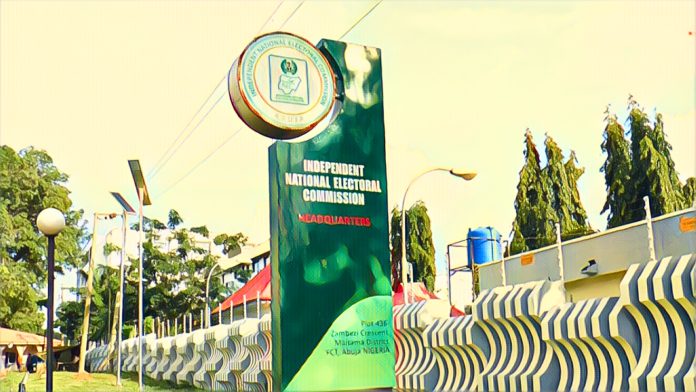
KEY POINTS
- The Independent National Electoral Commission has appealed a court ruling that nullified its authority to set timelines for party primaries and candidate nominations.
- The Federal High Court had earlier ruled that INEC overstepped its powers under the Electoral Act by imposing such deadlines.
- The appeal outcome could significantly shape how political parties conduct primaries ahead of the 2027 general elections.
The Independent National Electoral Commission, INEC, has formally challenged a federal high court judgment that nullified its authority to set timelines for political party primaries and candidate nominations ahead of the 2027 general elections.
The commission filed a notice of appeal alongside a motion for stay of execution on Monday, May 25, seeking to suspend the effect of the ruling while the legal process continues at a higher court.
The move signals escalating legal uncertainty around the electoral timetable and the extent of INEC’s regulatory powers over political parties.
The dispute stems from a recent judgment delivered by the Federal High Court in Abuja, which ruled that INEC cannot legally impose deadlines on political parties regarding the conduct of their primary elections.
Presiding Judge Mohammed Umar held that the powers granted to INEC under relevant provisions of the Electoral Act do not extend to determining when or how political parties should conduct their internal primaries.
The case was initiated by the Youth Party (YP), which challenged INEC’s authority to regulate party nomination timelines for the 2027 elections.
The court decision effectively invalidated parts of INEC’s earlier timetable, which had required political parties to complete membership register submissions, conduct primaries, and finalize candidate nominations within strict deadlines.
INEC Argues Court Misinterpreted Electoral Act
In its appeal, INEC argued that the trial court misinterpreted key provisions of the Electoral Act and failed to properly consider jurisdictional issues raised during the case.
The commission, through its counsel Alex Izinyon, maintained that sections of the Electoral Act were wrongly interpreted in a way that restricted INEC’s regulatory oversight functions.
INEC also contended that the court failed to adequately address whether the suit itself was hypothetical or lacked justiciable grounds, describing this as a legal error.
The electoral body further argued that the judgment misapplied provisions relating to INEC’s regulatory authority over electoral processes.
The appeal has intensified debate over the scope of INEC’s powers in managing Nigeria’s electoral process, particularly in relation to political party activities ahead of general elections.
INEC’s revised timetable had previously required political parties to submit membership registers, conduct primaries, and complete candidate substitution processes within defined deadlines ahead of the 2027 elections.
The court ruling effectively suspended that framework, creating uncertainty over how electoral preparations will now be coordinated.
Stakeholders have raised concerns that prolonged legal disputes could disrupt planning timelines for parties and the electoral commission.
The outcome of the appeal is expected to have significant implications for the structure and timing of Nigeria’s 2027 general election preparations.
If the appellate court upholds the lower court’s decision, political parties may gain broader autonomy in determining their internal nomination processes without strict regulatory deadlines from INEC.
However, if INEC succeeds, the commission will retain its authority to enforce structured timelines to guide party primaries and candidate nominations nationwide.
For now, the case remains a key legal flashpoint in Nigeria’s electoral process as preparations for the next general election gradually intensify.

