

KEY POINTS
- Obasanjo rejected El-Rufai as successor in 2007.
- He said El-Rufai lacked maturity for national leadership.
- Chidoka urged building strong systems over rhetoric.
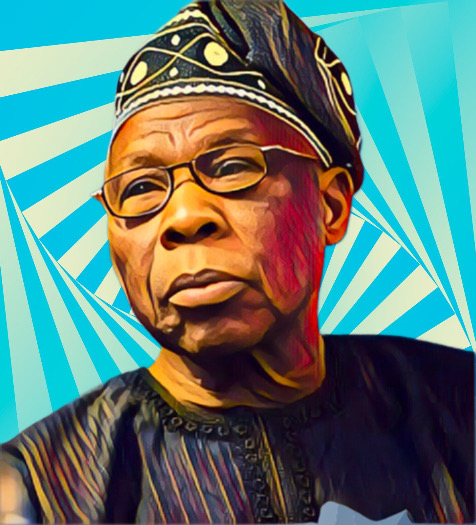
Former President Olusegun Obasanjo has revealed that he once rejected a suggestion to choose Nasir El-Rufai, then Minister of the Federal Capital Territory, as his successor at the end of his administration in 2007.
Speaking at the Ajibosin Platform Annual Symposium in Abeokuta, Ogun State, Obasanjo said he declined the proposal because he felt El-Rufai, who had served under him as Director-General of the Bureau of Public Enterprises and later as FCT Minister, was “not yet mature enough” to lead a nation as complex as Nigeria.
Obasanjo on leadership and El-Rufai’s maturity
The former president made the disclosure in response to a keynote speech by former Aviation Minister Osita Chidoka, who recounted his first meeting with Obasanjo through El-Rufai at age 34, an encounter that led to his appointment as Corps Marshal of the Federal Road Safety Corps.
Interrupting the speech, Obasanjo smiled and recalled, “He didn’t mention that when I was leaving government, he was pushing that his friend, El-Rufai, should be brought in as my successor.” The audience laughed as Chidoka nodded in agreement.
“I did not yield to the pressure,” Obasanjo added. “Later, he asked why I didn’t agree, and I told him El-Rufai needed to mature. Many years later, after seeing his performance, he came back and said, ‘You were absolutely correct.’”
Obasanjo praised members of his former cabinet for their competence and contributions between 1999 and 2007 but stressed that leadership demands exposure, character, and training.
Chidoka further urges institutional reform in leadership
In his address, Chidoka argued that Nigeria’s struggles persist not for lack of ideas but due to weak systems that fail to ensure accountability and continuity.
“Leadership finds its true measure not in speeches or charisma, but in the systems it leaves behind,” he said. “Nigeria’s problem has never been the absence of ideas; it is the absence of systems strong enough to outlive their authors.”
Furthermore, he called for measurable frameworks to assess governance performance, suggesting national dashboards and accountability tools that track promises and budgets.
The symposium also drew political figures, academics, and civic advocates to discuss the theme “Leadership, Governance, and Institutional Renewal in Nigeria.”

