

Key Points
-
Maduka says Coscharis would make him worth $5 billion if listed.
-
He rebuilt after losing $200 million to a failed loan.
-
Coscharis Group now drives clean energy and operates in 10 countries.
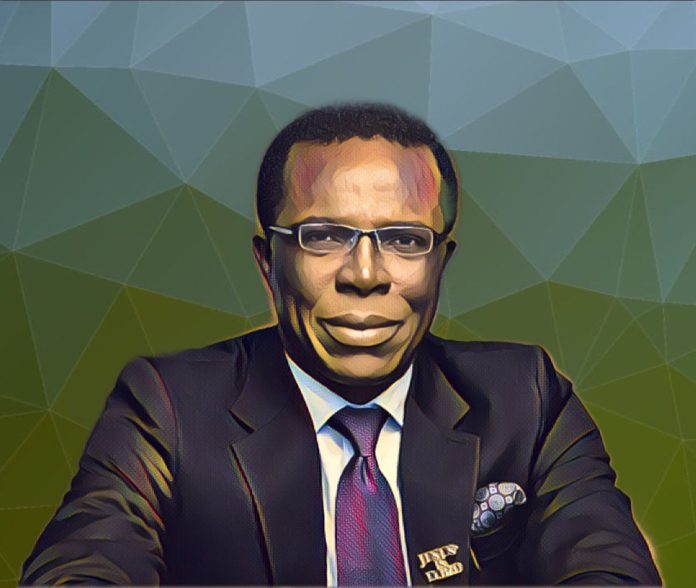
Nigerian entrepreneur Cosmas Maduka believes his company, Coscharis Group, could make him worth about $5 billion if it were listed on the stock exchange.
He made the remark while reflecting on a career that spans more than five decades and has shaped modern Nigerian enterprise.
Now 67, Maduka remains one of Nigeria’s most recognized business figures. For many who grew up in the 2000s and 2010s, Coscharis Motors represented success.
Its showrooms lined with BMWs, Jaguars, and Fords became symbols of wealth and ambition.
“If our company were publicly listed on the stock exchange, which is how Forbes usually estimates wealth, I wouldn’t be worth less than $5 billion today,” he said.
From Street Hawker to Auto Mogul
Maduka’s journey started far from privilege. Born in Nnewi, Anambra State, in 1958, he lost his father at four.
He dropped out of school early to help his mother. By six, he was selling goods on the streets.
At sixteen, he worked as an apprentice mechanic under his uncle but was dismissed after a disagreement and left with only N200. That setback became a turning point.
At seventeen, he co-founded a small auto parts shop called CosDave. It failed, but he tried again in 1977, creating Coscharis Motors.
The name combines his and his late wife Charity’s names. Their partnership became both personal and professional, shaping the foundation of the company.
Coscharis gained national recognition in 1982 when the government issued import licenses to ten motor firms.
The company secured one and soon built strong partnerships with Ford, Jaguar, and BMW.
Over the years, Maduka expanded beyond car sales. Coscharis Group grew into a conglomerate with interests in agriculture, technology, healthcare, petrochemicals, and consumer goods.
That diversification, he explained, came from understanding Nigeria’s unpredictable economy and adapting fast.
Lessons from Loss and Recovery
Maduka’s success followed years of setbacks. “Ten years ago, I appeared on the Forbes Africa cover as the man who turned $1 into $500 million,” he recalled.
“That came shortly after I lost $200 million to a bad loan I gave to someone I considered a younger brother.”
The loss forced him to change how he handled capital and relationships. Instead of giving up, he rebuilt his business.
Today, Coscharis operates in more than ten countries, including Japan, where it owns a major auto company.
He also mentors young entrepreneurs. “I’ve supported many of them. Some repaid their loans, others didn’t,” he said.
“What I’ve learned is that money without knowledge is wasted. Knowledge and the right values create wealth.”
Pushing Innovation and Clean Energy
Maduka’s focus has now turned to sustainable growth. In 2024, Coscharis Technologies, the group’s tech arm, launched a $4 billion renewable power project.
It aims to boost solar energy and green infrastructure while reducing Nigeria’s reliance on fossil fuels.
Five decades after starting his business with a few naira, Maduka has built a multinational employer with thousands of staff. His story captures both the struggles and opportunities of running a business in Nigeria.
He believes a public listing would reveal the company’s true worth. “If Coscharis were on the stock exchange,” he said, “its valuation would show how much value we’ve created.”
Estimates currently place his fortune below $500 million, but his influence runs deeper than wealth. His journey shows how persistence, adaptability, and faith in local enterprise can shape a nation’s private sector.

