

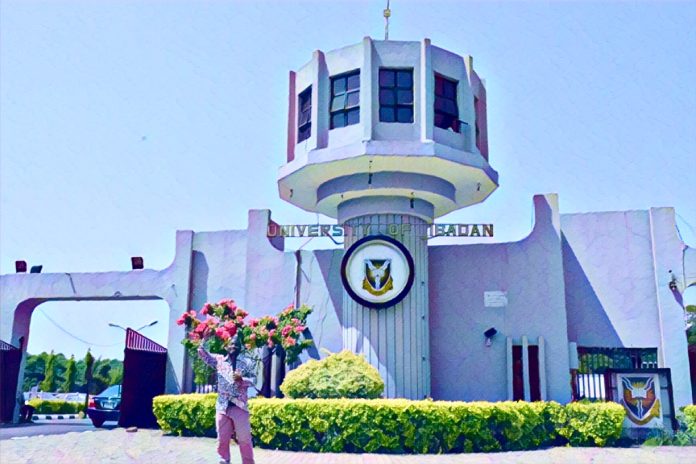
Key Points
-
UI graduates 5,900 students during its latest convocation ceremony today.
-
First-class tally rises sharply across key faculties at the university.
-
UI graduates 5,900 even as academic disruptions challenge institutional stability.
The University of Ibadan has had one of its best academic years in a long time. Vice-Chancellor Professor Kayode Oyebode Adebowale said that despite funding issues and instability in the sector, the university has seen steady improvements in teaching, research, and professional training.
Adebowale confirmed that the school had 448 first-class graduates from undergraduate and professional programs during the 76th Foundation Day and Convocation Ceremony at the International Conference Centre. He said that the results show that public universities can bounce back from problems like financial problems, infrastructure problems, and strikes.
Faculties keep track of bigger improvements in distinctions
Several faculties saw measurable improvements in their students’ grades over the course of the year. The Faculty of Technology, Agriculture, Renewable Natural Resources, Education, and Social Sciences all saw big increases in distinctions. For example, Computer Science, Mechanical Engineering, Economics, and Forestry Resources Management all had their highest number of top grades in almost ten years.
Adebowale said that the changes in assessment methods, more student support services, and easier access to digital learning tools were all factors in the improvement.
He also talked about how professional programs were doing better, with big jumps in disciplines that needed lab work or field-based learning after the university improved its research and teaching facilities. The Vice-Chancellor said that these gains showed that the administration’s long-term plan to modernise academic units through targeted investments was working.
As partnerships get stronger, research output goes up
The Office of Research, Innovation, and Strategic Partnerships (ORISP) says that UI’s research productivity steadily increased during the school year. The university got more peer-reviewed publications, more applications for grants from outside sources, and better success rates for projects funded by groups like TETFund, the Bill & Melinda Gates Foundation, and private-sector partners like Olam Agri and First Bank of Nigeria.
Professor Jonathan Babalola, the Dean of the Postgraduate School, said that more students were enrolling in postgraduate programs, especially in STEM fields that are important for national development. He said that UI is now more competitive among applicants for advanced degrees because the university has improved its research facilities and put more emphasis on innovation.
Getting a job after graduation is still a top priority
The university said that the 5,900 graduates who are entering a job market that is getting tighter are better prepared because they have better career development support. During the year, UI added more entrepreneurship modules, internship placements, and practical training that was linked to the industry. During convocation week, the Chancellor, Alhaji Aminu Ado Bayero, gave honorary degrees to doctoral scholars and departmental prize winners. This was part of UI’s effort to solidify its position as the best research university on the continent.

