

KEY POINTS
- Governor Fubara dissolved his entire cabinet and ordered immediate handover to senior civil servants.
- He praised the outgoing officials for their contributions despite the sudden shake-up.
- The decision followed a private Abuja meeting with Wike and President Tinubu amid Rivers political tensions.
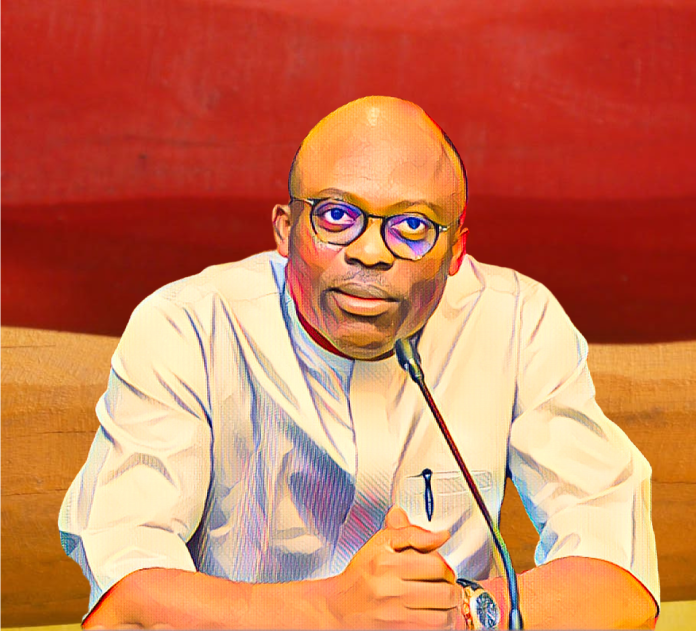
Rivers State was thrown into political suspense on Thursday evening after Governor Siminalayi Fubara ordered the immediate dissolution of his cabinet, effectively removing all commissioners and political appointees from office in a sweeping administrative reset.
The directive requires the affected officials to hand over their responsibilities without delay to permanent secretaries or the most senior civil servants in their ministries to ensure continuity of governance.
The decision was formally communicated in a statement signed by the governor’s newly appointed Chief Press Secretary, Onwuka Nzeshi.
The announcement also confirmed the change in the governor’s media leadership, signaling that the cabinet dissolution is part of a broader restructuring of his administration’s political and communication machinery.
Despite the abrupt nature of the move, Fubara expressed appreciation to the departing appointees, commending what he described as their immense contributions to his government and to the development of Rivers State.
He wished them success in their future endeavours and acknowledged their roles in supporting his administration’s policies and governance agenda.
Political timing raises questions
The development comes only days after a closed-door meeting in Abuja involving the governor, the Minister of the Federal Capital Territory, Nyesom Wike, and President Bola Tinubu.
The meeting was reportedly convened to address the lingering political tensions and power struggle that have unsettled Rivers State’s political landscape in recent months.
Observers say the cabinet dissolution may be connected to ongoing efforts to stabilise governance in the state amid factional disputes and shifting political alliances, although the governor has not officially linked his decision to the Abuja talks.
By directing permanent secretaries to take temporary charge, the governor appears intent on preventing administrative paralysis while he reorganises his executive team.
Such civil service-led interim arrangements are typically used to maintain policy implementation and routine government operations during political transitions.

