

Key Points
- Amina Mohammed challenged African women to lead with courage, conviction, and deliver measurable results for people and communities.
- Mohammed pledged UN partnerships and technical support to help Niger Delta women build sustainable, coordinated programs.
- NDDC women’s director Ahunna Imoni told Mohammed that floods, poverty, and displacement devastate women across Niger Delta communities.
UN deputy secretary-general Amina Mohammed urges African women to lead with courage, pledges support for Niger Delta
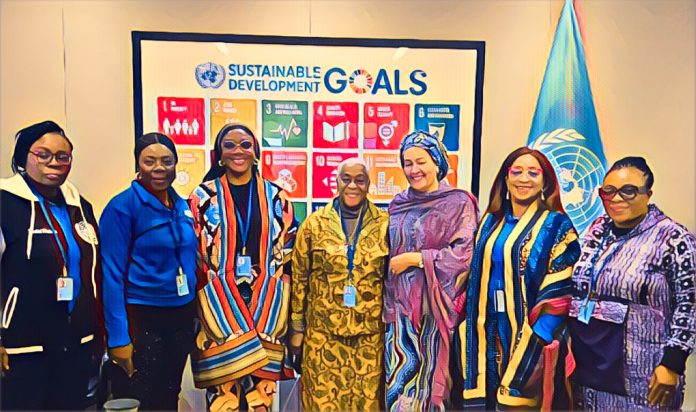
United Nations Deputy Secretary-General Amina Mohammed called on African women Tuesday to lead with courage and conviction, telling a delegation of Niger Delta women visiting New York that delivering real results for people and communities is what defines lasting leadership.
Mohammed made the remarks during a private audience with Nigerian women attending the 70th Session of the Commission on the Status of Women, known as CSW70.
The session convened at UN headquarters in New York under the theme “Accelerating the achievement of gender equality through digital innovation, education, and inclusive economic development.”
Niger Delta delegation travels to New York
The delegation was led by Dr. Timiebi Koripamo-Agary, a former permanent secretary in Nigeria’s ministries of Labor and Productivity, as well as Information and Culture.
Joining her were representatives of the Niger Delta Development Commission women’s team, led by Director of Culture and Women Affairs Ahunna Imoni, along with NGO representatives and a media delegate.
Koripamo-Agary told Mohammed the visit was an opportunity to honor her global impact and to expose younger mentees to what is possible through public service.
She referenced Mohammed’s past work on the Ogoni cleanup program and praised her continued advocacy for environmental justice in the Niger Delta.
‘Stop agonizing and start organizing’
Imoni told Mohammed that women across Niger Delta communities face compounding crises, including poverty, flooding, and displacement, with pregnant women and children dying in internally displaced persons camps during conflict and environmental emergencies.
“I came into a department that was silent and inactive,” Imoni said. “Women in the Niger Delta suffer the hardest impacts of crises.”
Mohammed responded by urging the group to channel their energy into structured, sustainable programs.
“You have to stop agonizing and start organizing,” she told them. She added that well-coordinated programs attract partnerships capable of outlasting political administrations, and promised to connect the delegation with relevant UN institutions for technical support and capacity development.
On legacies, the SDGs, and women in power
Asked about her legacy, Mohammed said she focuses on whether her work leaves the world better than she found it, pointing to the growing number of Africans and African women in UN leadership as evidence of progress. She cited a woman president in Namibia and the female president of Tanzania as leaders deserving of visibility and support.
On the Sustainable Development Goals, Mohammed expressed measured optimism. “We don’t give up until the day we miss it,” she said, identifying an end to maternal mortality and universal access to education as priorities through 2030.
She closed by calling on young African women to pursue diligence and integrity. “Everything you do, deliver for human beings and your environment,” she said. “Your voice matters, and the courage of your conviction matters.”

