

KEY POINTS
- Finance Minister Taiwo Oyedele said the new Tax Acts focus on building public trust, not just lifting revenue.
- The reforms simplify tax payment, reduce the number of taxes and exempt low-income earners from Personal Income Tax.
- Presidential adviser Tope Fashua said multiple taxation and informal road levies are next on the reform agenda.
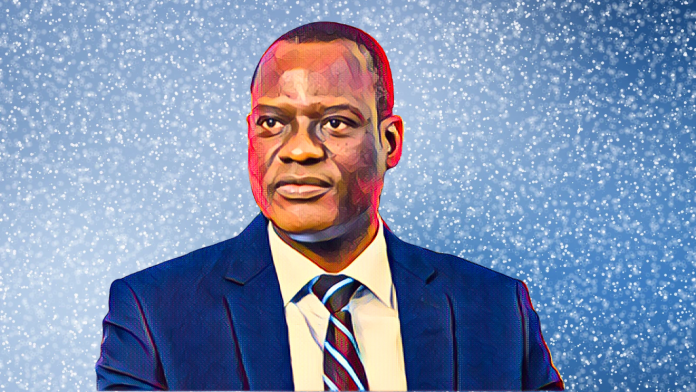
Finance Minister Taiwo Oyedele on Monday said Nigeria’s new Tax Acts target public trust and lighter compliance burdens for taxpayers, not just higher revenue collection, framing the reform agenda as a long-overdue reset of the country’s fiscal contract.
Oyedele addressed the 2026 Annual Conference of the Chartered Institute of Taxation of Nigeria virtually from Abuja, telling tax professionals that revenue gains will follow once the public sees value in paying taxes.
Now his comments arrive as the federal government leans into the new tax regime to broaden the formal tax base, simplify compliance and cut the informal levies that have long bled commerce on Nigerian roads and ports.
Trust before revenue
Specifically, Oyedele said the current tax regime has simplified payment, reduced the number of taxes and exempted low-income earners from Personal Income Tax. The combination, he argued, signals a tax system designed to ease pressure on households while encouraging voluntary compliance.
Indeed, the minister charged tax professionals to play three roles: advise the government, interpret the new laws for clients and educate the public on what has changed.
Moreover, Oyedele’s framing positions the reforms as a credibility play, with the implicit argument that Nigerians will pay more once they believe taxes translate into visible public services rather than vanishing into opaque budget lines.
Fashua flags road levies
Furthermore, Special Adviser to the President on Economic Matters in the Office of the Vice President Tope Fashua said fiscal policy must keep evolving against a shifting global backdrop. He acknowledged that the reform path is bumpy and that multiple taxation continues to frustrate businesses.
“It’s not going to be a walk in the park. It’s not going to be an easy affair; if it was, it would have been done a long time ago. So people will still complain about multiple taxation, levies from local governments and all of that,” Fashua said.
Additionally, Fashua zeroed in on the cost of moving cargo from Kano to Lagos Port, pointing to the multiple unofficial stoppages that inflate logistics costs. He said the new regime has begun outlawing some of these collections, although enforcement remains a citizenship task.
“Those who are collecting this unnecessary money are also Nigerians. So we have to appeal to ourselves. We also have to be watchdogs,” Fashua added.
CITN backs the direction
Meanwhile, CITN President Innocent Ohagwa said this year’s conference theme directly tackled the reform agenda, focusing on a tax system that is “globally relevant, economically competitive, socially equitable, and fiscally sustainable.”
Ohagwa positioned tax professionals as central to translating policy into compliance, signaling the institute’s willingness to back the federal government’s reform direction.
However, the broader test sits beyond conference halls, with state and local governments still extracting overlapping levies that the Oyedele-led Tax Reform Acts aim to streamline.
Together, the minister, the presidential adviser and the CITN president sketched a unified narrative: that revenue follows trust, that trust follows simplification, and that simplification follows enforcement against the petty levies eating into producer margins.
Whether the rhetoric translates into measurable changes in pump-to-store costs and household tax bills will determine how the reforms land. Yet for now, Oyedele’s pitch puts trust, rather than tax targets, at the center of his message.

