

KEY POINTS
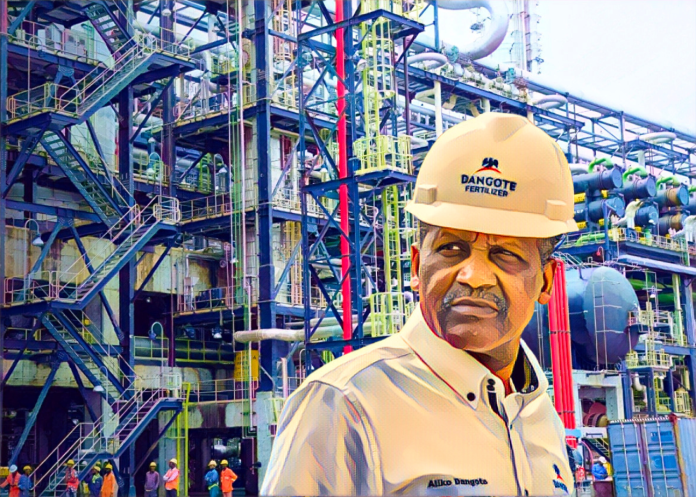
- Aliko Dangote alleged a fuel-import “mafia” fought to frustrate his $20 billion Lekki refinery to protect lucrative import flows.
- The refinery project, launched in 2013, weathered five years of land acquisition delays and naira devaluation from N156 to as high as N1,900 per dollar.
- Dangote built his own port to handle equipment weighing up to 3,000 tonnes, with 67,000 workers on site at peak construction.
Aliko Dangote on Thursday alleged that a “mafia” of fuel importers fought to frustrate his $20 billion Lekki refinery for years, in a candid account that lays bare the entrenched commercial interests that have profited from Nigeria’s decades-long reliance on imported petrol.
In an interview with Norway sovereign wealth fund chief executive officer Nicolai Tangen, Africa’s richest man said the importers feared the refinery would unwind the trade flows that have channeled Nigerian dollars into refined product purchases despite the country’s status as a major crude exporter.
Now the disclosures reframe the project as not just an industrial feat but a political and commercial battle, with the refinery’s completion reordering rent flows that vested interests had ridden for half a century.
Fifty years of fuel queues
Specifically, Dangote said Nigerians had endured fuel queues for more than 50 years, sometimes spending hours or even days at filling stations during Christmas in a country that pumps crude. Government refineries, he said, had not functioned properly for decades.
“In Nigeria, we had fuel queues for more than 50 years. People queued for days during Christmas just to buy petrol in an oil-producing country,” he said. “Government refineries were not functioning properly, so I decided to take the bold step of building a refinery.”
Indeed, the businessman framed the decision as one of national energy security rather than pure commercial calculation, even as he acknowledged the scale of the undertaking would have deterred most rational investors.
Land, currency and steel
Moreover, Dangote said land acquisition alone delayed the project for five years, with “entrenched interests in the oil business” creating obstacles along the way. The naira shift from N156 per dollar at project launch in 2013 to as high as N1,900 multiplied costs in local currency terms.
Furthermore, the group had to build its own port because no existing Nigerian facility could handle equipment weighing up to 3,000 tonnes per individual piece. Dangote also built roads, water infrastructure and ancillary facilities from scratch, with the refinery alone using 440 million litres of treated water across a water treatment section covering more than 30 hectares.
Additionally, the project mobilized 67,000 workers at peak, a workforce Dangote compared to the size of his hometown. He admitted that fully grasping the project’s scale upfront might have made him “chicken out,” likening the build to swimming across an ocean.
Banks and the “mafia”
Meanwhile, Dangote said the project drew financial backing from African Export-Import Bank, African Finance Corporation, Zenith Bank, Access Bank, United Bank for Africa and other Nigerian lenders. Standard Bank of South Africa and Standard Chartered also supported the build.
However, the same lenders that funded the refinery had to weather the same political risks the importers exploited. The “mafia” framing positions the refinery’s completion as a triumph not only over technical obstacles but over a commercial ecosystem built around imports, subsidy economics and dollarized trade flows.
Together, the alleged mafia, the currency shocks, the land delays and the bespoke infrastructure spending account for why the refinery cost ballooned beyond original projections, though the plant has since cleared 661,000 barrels per day in test runs.
Whether Nigeria’s downstream sector can shed the rent-seeking ecosystem Dangote describes will depend on how the post-subsidy market matures and whether competing refineries actually come online. Yet for now, the world’s largest refinery built by a single investor stands as a vindication of his bet, and a clear warning to those who tried to block it.

