

KEY POINTS
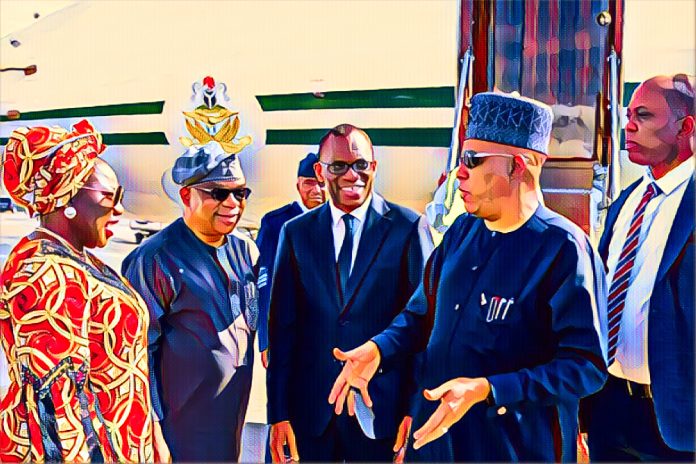
- Vice-President Kashim Shettima is leading Nigeria’s delegation to Benin Republic for the inauguration of President-elect Romuald Wadagni.
- Wadagni, a former finance minister, won the April presidential election and will be formally sworn in during a ceremony in Cotonou.
- Nigeria and Benin Republic reaffirmed strong diplomatic and ECOWAS ties, with heightened security measures in place for the inauguration event.
Vice-President Kashim Shettima has arrived in Cotonou, the commercial capital of Benin Republic, to represent President Bola Tinubu at the inauguration of President-elect Romuald Wadagni.
The Nigerian vice-president led a high-level delegation to the neighbouring West African country ahead of the official swearing-in ceremony scheduled for Sunday at the presidential palace. His presence underscores Nigeria’s diplomatic engagement in regional political transitions within West Africa.
The delegation is expected to join other African leaders, diplomats, and international dignitaries at the ceremony, which marks a major political milestone for Benin Republic.
President-elect Romuald Wadagni, who previously served as Benin Republic’s finance minister, emerged winner of the country’s presidential election held on April 12.
His victory was described as a landslide, signalling a significant shift in the country’s political leadership and ushering in a new administration expected to continue reforms in governance and economic management.
The inauguration ceremony in Cotonou will formally complete the transition process, with Wadagni set to take over leadership at the presidential palace.
Nigeria Reaffirms Diplomatic and Regional Ties with Benin Republic
According to a statement by Stanley Nkwocha, spokesperson to the vice-president, Shettima’s visit reflects the longstanding diplomatic, economic, and security relationship between Nigeria and Benin Republic.
Both countries are key members of the Economic Community of West African States (ECOWAS), working closely on issues such as trade, border management, and regional security cooperation.
The visit highlights Nigeria’s continued role in supporting democratic processes and stability within the West African sub-region, especially during leadership transitions.
Security has been significantly strengthened in Cotonou ahead of the inauguration, with reports indicating the deployment of Nigerian troops to strategic locations across the city.
According to security reports, the deployment forms part of coordinated regional arrangements aimed at securing the inauguration venue, major roads, and critical government installations.
Surveillance and patrol operations have also been intensified around the presidential palace and surrounding areas to ensure a smooth and secure ceremony involving multiple international delegations.
The inauguration is expected to attract heads of state, government officials, and diplomatic representatives from across Africa and beyond.
The programme of events includes official state ceremonies, transfer of presidential symbols of authority, and ceremonial processions linking Cotonou and Porto-Novo, the administrative capital of Benin Republic.
Following the event, Vice-President Kashim Shettima is expected to return to Nigeria, concluding his official representation at the inauguration.

