

KEY POINTS
- The ILO adopted the Decent Work in the Platform Economy Convention on June 12, 2026.
- It sets rights and duties for digital platforms, platform workers and member-states.
- The treaty covers all platforms and workers, with limited, justified exclusions allowed.
The platform economy, especially work organized through digital labour platforms, has become an increasingly important feature of the modern world of work. While it has opened new opportunities for businesses, workers and the formalization of economic activity, it has also raised concerns over working conditions, labour rights, social protection and the use of automated decision-making systems.
A new global standard
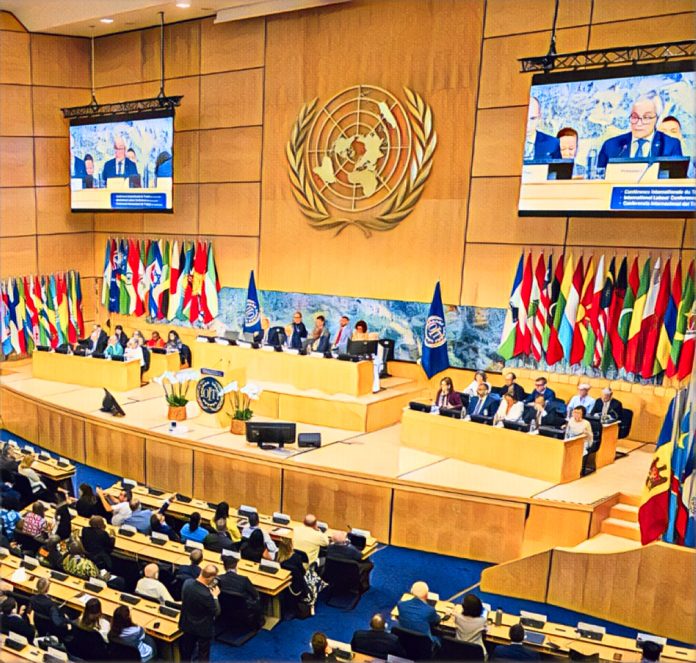
Recognizing both the opportunities and the challenges, the International Labour Organization adopted the Decent Work in the Platform Economy Convention on June 12, 2026. According to the ILO, the convention establishes an international framework for promoting decent work by setting out rights, protections and responsibilities that apply to digital labour platforms, digital platform workers and member-states.
Moreover, the convention defines its key terms clearly. It describes a digital labour platform as a person that, through digital technologies and automated decision-making systems, organizes or facilitates work performed for payment, whether online or in a specific location. Furthermore, it defines a digital platform worker as anyone engaged to provide such a service for remuneration, regardless of how national law classifies their employment status. The text also recognizes intermediaries that supply platform workers through contracts or subcontracting chains, and it specifies what counts as remuneration.
Broad scope, limited exclusions
On reach, the convention applies to all digital labour platforms and all platform workers, whether they operate in the formal or the informal economy. Therefore, the treaty deliberately casts a wide net, capturing the many workers who fall outside traditional employment categories.
However, the convention allows some flexibility. Where special problems of a substantial nature arise, a member-state may exclude limited categories of platforms or workers, but only after consulting representative organizations of employers, workers, platforms and platform workers. Consequently, any country that uses this option must justify it and, where practicable, work to extend the convention’s coverage over time.
In addition, the convention builds reporting duties into the process. A member that excludes any category must explain the exclusion in its first report and outline its law and practice on the matter. Subsequently, it must show what steps it has taken to widen coverage. Ultimately, the framework signals a global push to bring fairness, protection and accountability to a fast-growing sector, while it gives governments room to adapt the rules to local realities as the platform economy continues to evolve.

