

Key Points
-
ADC describes Tinubu’s 2026 budget as debt-heavy and fiscally risky.
-
The party challenges revenue projections and oil price assumptions.
-
ADC warns rising debt servicing costs will squeeze public spending.
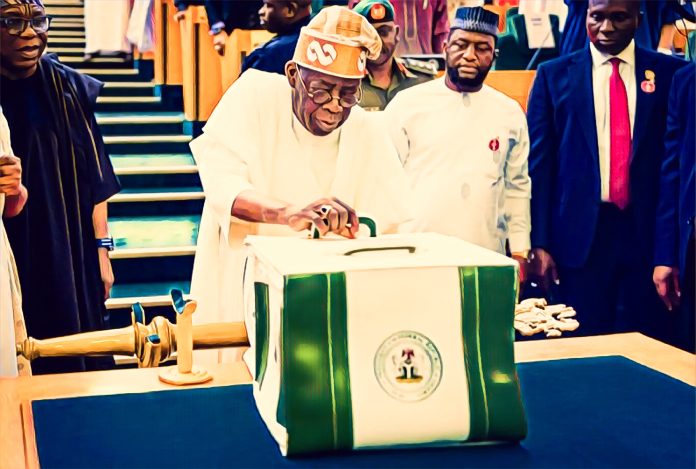
Nigeria’s African Democratic Congress has criticized President Bola Tinubu’s proposed 2026 budget, calling it a debt-heavy plan that could strain the country’s future finances.
In its initial review of the proposal submitted to the National Assembly, the opposition party accused the administration of poor fiscal judgment and weak long-term planning.
It warned that rising public debt could deepen Nigeria’s economic challenges.
Party rejects budget narrative
The ADC’s National Publicity Secretary, Bolaji Abdullahi, dismissed the government’s description of the proposal as a budget built on consolidation and shared prosperity.
He said the document reflects policies that have failed to stabilize the economy under the Tinubu administration.
According to the party, the 2026 proposal follows the same structure as the 2024 and 2025 budgets. The ADC argued that both earlier budgets suffered from weak implementation and unrealistic targets.
It added that running multiple national budgets at once shows deeper problems in fiscal coordination.
Revenue projections under scrutiny
The party raised concerns about the revenue assumptions behind the budget. It noted that federal revenue rose to about 20 trillion naira in 2024 largely due to currency devaluation.
Projections then jumped to 40 trillion naira for 2025 and climbed further to about 58.6 trillion naira in the 2026 plan.
ADC officials said those figures ignore economic realities. They warned that the projections depend on conditions that no longer exist, especially in the oil sector.
The party also questioned the oil price benchmark of 64 dollars per barrel. It said weaker global demand and uncertain production levels make the estimate risky. Any shortfall, it warned, could widen Nigeria’s fiscal gap.
Borrowing and debt servicing concerns
The ADC described the scale of borrowing as the most troubling part of the proposal. The government plans to borrow about 24 trillion naira against projected revenues of 34 trillion naira.
The party said such a gap signals fiscal stress rather than confidence. It argued that a deficit nearing 70 percent of expected revenue would raise alarms in any stable economy.
The ADC also pointed to rising debt servicing costs. It said those payments are projected to grow from 12.63 trillion naira in 2024 to about 15.52 trillion naira in 2026.
The party warned that higher servicing costs leave less money for public services and long-term investment.
The federal government has defended the proposal, citing security needs and economic pressures, while lawmakers prepare for detailed budget deliberations.

