

KEY POINTS
- Nigeria and the UK have agreed to return offenders and failed asylum seekers, recognizing UK-issued ID letters to speed up deportation.
- The deal includes joint operations to crack down on criminal gangs abusing visa routes, with stricter immigration enforcement in Nigeria.
- The agreement replaces the scrapped UK-Rwanda plan and is intended to strengthen bilateral relations while promoting fair and well-managed migration.
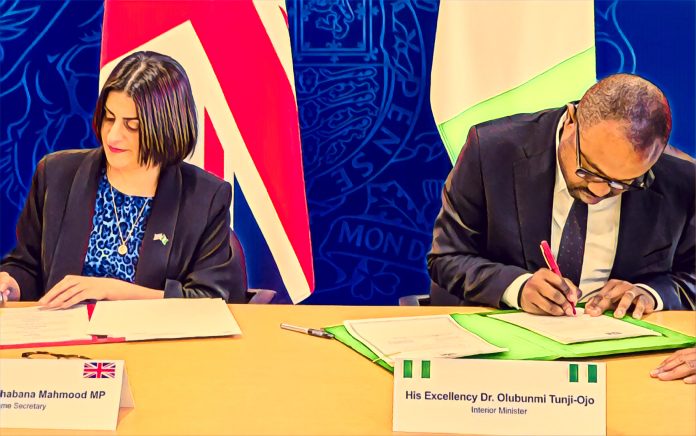
The Nigerian and British governments have agreed on a new migration deal allowing Nigeria to receive individuals with no legal right to remain in the UK.
The agreement, signed during President Bola Ahmed Tinubu’s state visit to the UK, removes the need for emergency travel documents, as Nigeria will now recognize UK-issued identification letters for returnees.
Prime Minister Sir Keir Starmer described the visit as “historic,” marking the first state visit to the UK by a West African leader in 37 years.
Speaking on the agreement, UK Border Security and Asylum Minister Alex Norris emphasized Nigeria’s key role in tackling illegal migration. He stated: “Anyone who abuses our systems, breaks our laws, or tries to cheat their way into Britain will be stopped and removed.”
Nigeria’s Minister of Interior, Olubunmi Tunji-Ojo, affirmed the country’s commitment to fulfilling its international obligations. He highlighted that the agreement is intended to strengthen UK-Nigeria relations and serve as a model for future bilateral partnerships on migration management.
Deal Includes Joint Operations and Crackdown on Criminal Gangs
The agreement establishes joint UK-Nigeria operations and information-sharing mechanisms to prevent criminal gangs from exploiting visa routes. Nigeria will also review and tighten immigration laws to ensure harsher penalties for offenders.
Since the 2024 UK general election, nearly 60,000 illegal migrants and foreign criminals have been returned or deported from the UK, with annual returns to Nigeria almost doubling to 1,150. A standardized document-checking system will also verify the authenticity of applications to reduce cases of fake job sponsorships, sham marriages, and forged financial records.
This agreement follows the collapse of the UK-Rwanda migration deal, which sought to relocate UK-identified illegal immigrants to Rwanda for asylum and resettlement. Legal challenges and subsequent government changes led to the plan being scrapped, with Rwanda seeking $100 million in compensation for the canceled arrangement.
The UK-Nigeria deal is seen as a more sustainable approach to managing migration, balancing border security with fairness and bilateral cooperation.

