

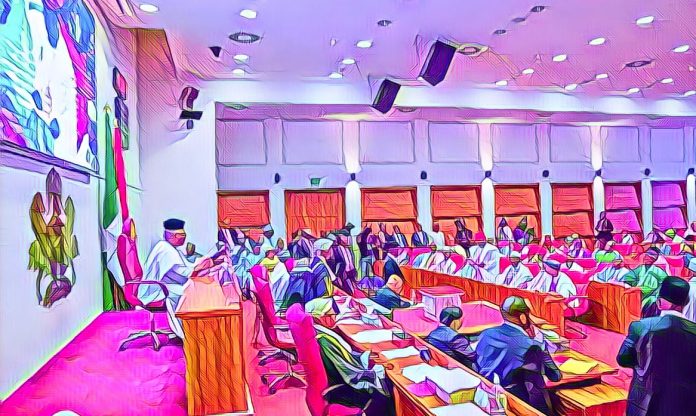
Nigeria’s lawmakers are under pressure to pass a N27.5 trillion ($66.7 billion) budget for 2024 before the end of this month, as the country grapples with high inflation, low revenue, and mounting debt.
The proposed budget, which is the largest in the country’s history, aims to boost economic growth, create jobs, and improve infrastructure. It also includes a N9.18 trillion ($22.3 billion) deficit, which will be financed by internal and external borrowings, as well as proceeds from privatization.
However, the budget faces several hurdles, both in the parliament and in the market. The Joint National Assembly Committee on Appropriations has given a 48-hour deadline to all sub-committees to submit their reports on the budget, after President Bola Tinubu presented it to the joint session of the National Assembly last month.
The committee’s chairman, Senator Olamilekan Adeola, warned that any committee that fails to meet the deadline will forfeit its input and give the committee the power to treat its budget independently.
According to a report by Vanguard, he also appealed to his colleagues to keep the January-December budget cycle, which was adopted last year to align with the fiscal year.
But even if the lawmakers manage to pass the budget on time, they will have to contend with the rising cost of borrowing, which could undermine the budget’s feasibility and sustainability. Nigeria’s debt service to revenue ratio, which measures the proportion of revenue used to pay interest on debt, rose to 83% in the first quarter of 2023, according to the Debt Management Office. This means that the government spent more than four-fifths of its revenue on debt servicing, leaving little room for capital expenditure and social spending.
The situation could worsen as the global interest rates rise, driven by the US Federal Reserve’s tapering of its bond-buying program and the expectation of higher inflation. Nigeria, which relies heavily on foreign loans, could face higher borrowing costs and currency risks, as the naira depreciates against the dollar.
To avoid a debt crisis, some experts have called for a review of the budget’s assumptions and priorities, as well as a diversification of the revenue base. They have also urged the government to improve its fiscal transparency and accountability, and to implement structural reforms to enhance the business environment and attract investment.
The budget’s impact on the economy and the welfare of Nigerians will depend largely on how well it is implemented and monitored. The government has projected a 4.2% growth rate for 2024, up from 2.7% in 2023, and a reduction of the unemployment rate from 33.3% to 29%. It has also allocated N4.89 trillion ($11.9 billion) for capital projects, with a focus on roads, railways, power, health, and education.
But these targets and allocations will only translate into tangible outcomes if the government can overcome the challenges of revenue shortfall, debt burden, insecurity, corruption, and policy uncertainty. As the clock ticks for the budget’s passage, Nigerians hope that their lawmakers and leaders will deliver a spending plan that will not only meet their immediate needs, but also secure their future.

